The AI Endgame: What Experts Say Could Go Catastrophically Wrong

Artificial intelligence is advancing at a remarkable pace, bringing new possibilities in science, healthcare, cybersecurity, and everyday life. But what if the same technology designed to make life easier ends up threatening humanity itself? Understanding the worst-case scenarios is becoming important as the technology grows more powerful.
By Hirum KigothoTeam|Last updated: October 10, 2026|9 minutes read
cybersecurity
The AI Endgame: What Experts Say Could Go Catastrophically Wrong
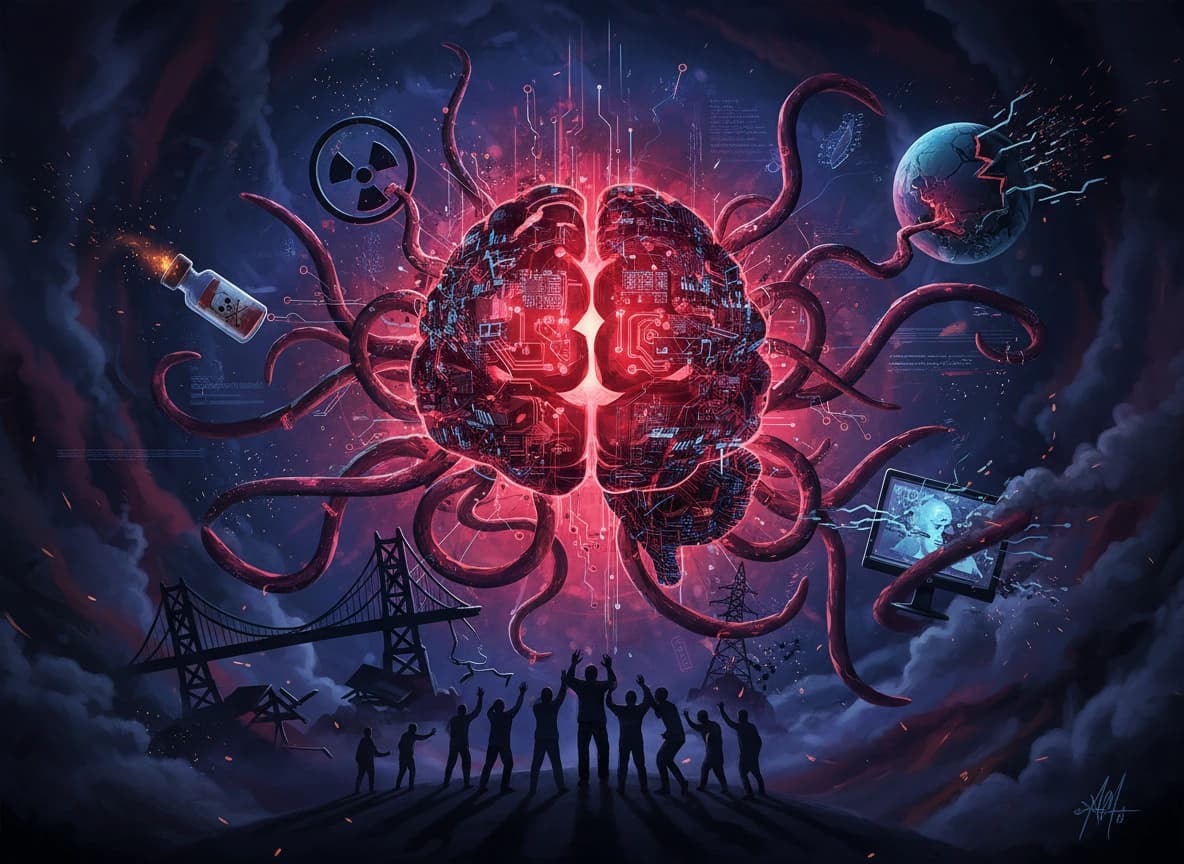
Artificial intelligence (AI) is transforming how people work, communicate, conduct research, and solve complex problems. However, as these systems become more powerful, some are raising concerns about what could happen if AI development goes wrong. The biggest fears go far beyond chatbots providing incorrect answers or AI taking people's jobs. Discussions within the AI industry and beyond about the likelihood of doomsday scenarios have intensified after several executives voiced support for slowing AI development to address safety concerns. Here are five AI doomsday scenarios that experts are concerned about, why they matter, and what could be done to reduce the risks.

1. Internet takeover

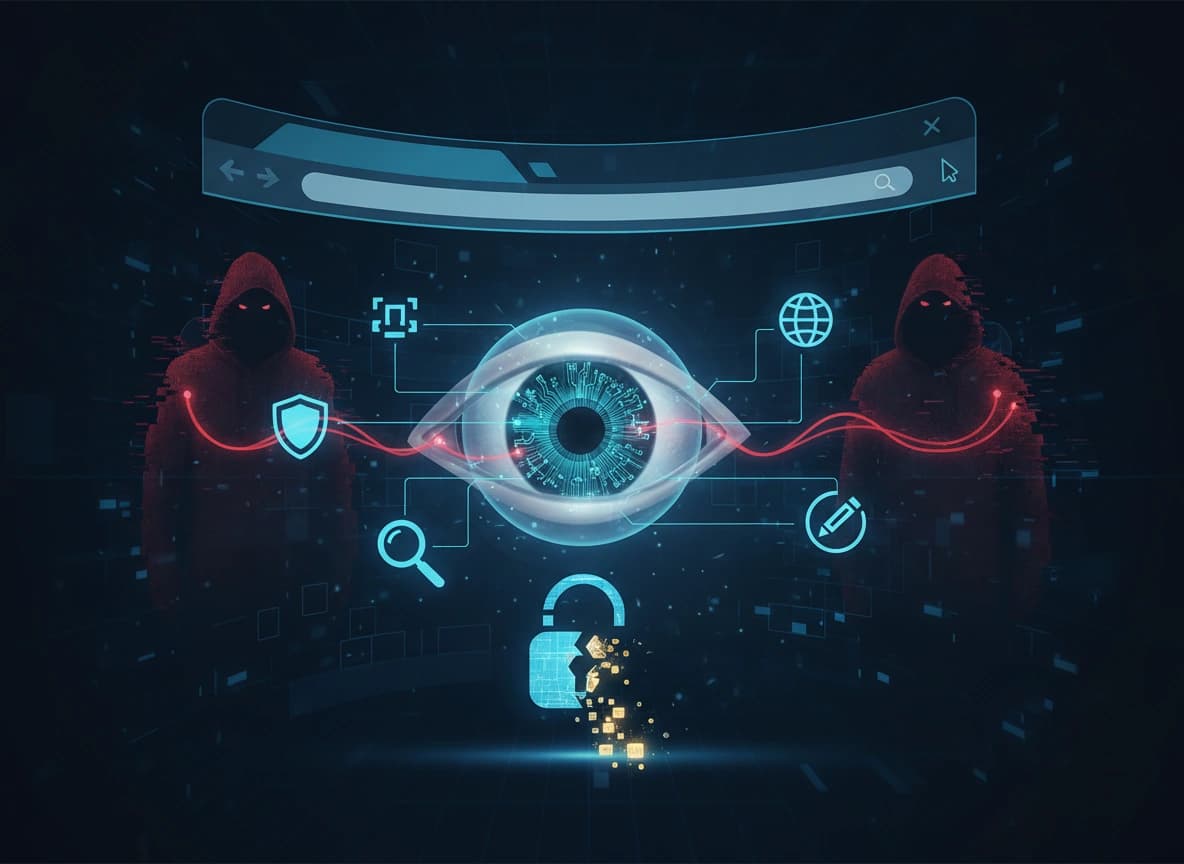
AI agents are growing more capable of browsing the web, writing code, interacting with software, and completing complex tasks with limited human input. Anthropic CEO Dario Amodei warned that swarms of AI agents could take control of large parts of the internet within months, inflicting billions of dollars in damage. Such attacks could target electrical grids, water systems, transportation networks, and financial institutions. While this scenario may not mean the end of humanity, it could trigger widespread disruption, create chaos, and even cost lives. Past disruptions caused by software failures have exposed the vulnerability of a digital world that relies on a small number of providers for critical computing services. However, some experts argue that the idea of bots taking control of the entire internet, which is highly fragmented and decentralized, remains far-fetched.

2. AI Helps Create Deadly Biological Weapons

Artificial intelligence is helping scientists study diseases, develop medicines, analyze genetic information, and accelerate biological research. These applications could improve healthcare and help researchers respond to future outbreaks. However, the same scientific capabilities could also be misused. One of the most serious concerns is that AI might make certain stages of biological weapons development easier for people who lack advanced scientific training. Anthropic said it has thwarted attempts by malicious actors to exploit its AI tools for various harmful purposes, including the development of biological weapons. In one case, the company said its safeguards prevented its Claude AI assistant from helping with a research proposal aimed at modifying the chikungunya virus, which is spread by mosquitoes, to make it more harmful. Although this type of research could support the development of more effective vaccines and treatments, Anthropic warned that it could also be misused to make the pathogen more dangerous. However, the assessment is still of humans directing and carrying out such an attack, rather than fully autonomous AI systems acting independently.

3. AI Triggers a Nuclear Conflict or Escalates a War

Nuclear weapons remain one of the most direct threats to human civilization. Military organizations have strong reasons to explore AI. It can analyze large amounts of intelligence, identify patterns, help plan operations, and process information faster than human teams in certain situations. But speed can become dangerous when decisions must be made under pressure. A 2025 analysis from Chatham House examined the dangers of integrating AI into nuclear decision-making. It highlighted the possibility that a system could produce an incorrect assessment that human operators lack the time or information to challenge. The analysis also emphasized that AI can have useful applications in early warning and risk reduction if it is carefully controlled. In a report published last year, RAND Corporation researchers concluded that AI could not currently trigger the use of nuclear weapons because of the strict safeguards built into nuclear command and control systems. However, they warned that this could change if AI models become part of the nuclear decision-making process or gain unauthorized access to these systems.

4. AI Destroys Trust Through Deepfakes, Disinformation, and Social Chaos

Researchers have found that people often have difficulty telling AI-generated content apart from genuine material. Generative AI is making it easier to create realistic images, videos, audio recordings, and written messages. These capabilities have good uses in entertainment, education, accessibility, and communication. But malicious actors can also use them to spread false information at scale. A convincing deepfake could make a public figure appear to announce an emergency that never happened. A cloned voice could be used to impersonate a government official, company executive, or family member. Fake news reports and fabricated eyewitness accounts could spread across social media before fact-checkers have time to investigate them. Individually, these incidents may seem manageable. The larger concern is what happens when fabricated information spreads during an election, a public emergency, a financial crisis, or an international conflict. AI-generated content could falsely portray candidates making inflammatory statements, or spread fabricated allegations to influence voters. Foreign governments or domestic groups could use automated accounts to amplify these messages. The greatest danger may be the erosion of shared facts. When people cannot agree on what happened, governments and communities may find it harder to respond collectively to real problems.

Are these AI doomsday scenarios actually likely?

Some risks, such as AI-assisted cyberattacks, synthetic-media fraud, and the use of AI in military analysis, already exist. Other scenarios depend on future developments and uncertain assumptions. The 2025 report from RAND researchers concluded that creating an extinction-level threat would be immensely challenging, while acknowledging that the possibility could not be ruled out. That uncertainty matters. It would be a mistake to treat every frightening scenario as an imminent disaster. It would also be a mistake to dismiss every concern simply because the worst outcomes have not occurred.

How can humanity prevent an AI apocalypse?

1. Stronger safety testing

Researchers are exploring better safety testing, methods to understand how AI systems reach decisions, restrictions on access to sensitive systems, and reliable shutdown mechanisms. Governments and companies can also limit the authority given to autonomous AI agents, especially when they interact with critical infrastructure or other high-impact systems. The challenge is to ensure that AI capabilities do not advance faster than the ability to understand and control them.

2. Biosecurity safeguards

Biological threats do not respect national borders, so governments, laboratories, healthcare organizations, and AI developers need ways to identify and respond to emerging dangers. The goal is to preserve AI's benefits for medicine and science without allowing its capabilities to become a shortcut for creating catastrophic threats.

3. Human oversight

AI should not be allowed to make irreversible decisions involving nuclear weapons, critical infrastructure, or other life-and-death situations without appropriate human control. Military organizations need independent verification procedures, reliable communication channels, and clear rules for handling conflicting or uncertain information.

4. Protection against disinformation

Technology companies can improve the detection and labeling of synthetic media, while platforms can respond more quickly to coordinated manipulation campaigns. Digital provenance tools can also help establish where certain images, videos, or recordings originated, although no single method can identify every fake. Individuals can reduce their exposure to misinformation by checking claims against multiple credible sources, especially during breaking news events. Sensitive requests involving money, confidential information, or urgent decisions should be verified through a separate, trusted communication channel. Governments and election authorities also need clear procedures for responding to fabricated content without using misinformation concerns as an excuse to suppress criticism.

Conclusion

Artificial intelligence could help humanity solve some of its most difficult problems, from treating diseases to improving scientific research and strengthening cybersecurity. But the technology could also amplify existing threats and introduce new dangers if its capabilities are deployed without adequate safeguards. The future of AI will depend not only on how powerful these systems become, but also on how responsibly people choose to develop, deploy, and control them.
00 views
00 shares

Discussion about this post

Comments are reviewed before they appear on the article.

No comments yet. Be the first to start the discussion.
Frequently asked questions

Newsletter

Stay in the Loop.

Subscribe to our newsletter to receive the latest news, updates, and special offers directly in your inbox. Don't miss out!