The bar has to fit every character
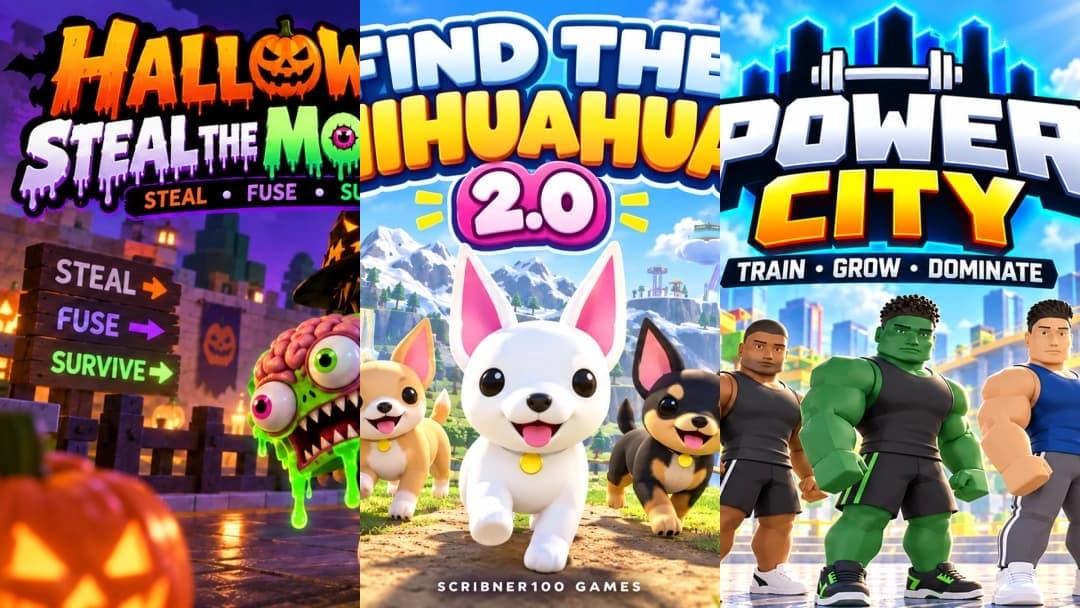
Power City is a training and adventure game about strength, speed, and endurance. Your story is a rise from Rookie toward Legend. You begin with room to grow. You train, unlock characters, and take on harder challenges. The gym is a familiar place to start. Stepping outside it gives that progress something to do. The adventure covers five worlds: Power City, Titan Peak, Lava Island, Arctic Adventure, and Nuclear Aftermath. Mountain trials ask you to haul, climb, and break through barriers. The volcanic challenges lead toward an eruption escape. The Arctic adds icy routes and a collapsing ice shelf. Nuclear Aftermath moves into an industrial landscape, with dangerous climbs, evacuation routes, and a reactor emergency. Back in the gym, workouts, trainers, upgrades, character unlocks, and rebirths give you further goals. One practical problem was workout equipment on characters of very different sizes. A bar that lines up with a smaller character can pass through a larger character's body. The grip can pass a numerical check. On screen, the bar is inside the character. I had to review hand placement, body clearance, and the animation together. The same pass applied to anything a new player has to read. Signs needed to point toward the correct destinations. Challenge entrances needed to be recognizable. Workout controls needed to stay readable on different screen sizes. Rewards, purchases, and saving player data needed their own checks. A workout that forgets your progress is a different failure from a bar in the wrong place. The tests that caught those problems are ordinary. I change characters before a workout. I leave one activity and start another. I look at the interface on a smaller screen. I follow the signs as though I have never visited the map.Build the route with the same care as the reward
Find the Chihuahuas! 2.0 is an exploration game. You search the world, look for hidden Chihuahuas, and build a collection. The Collection Index shows what you have discovered and what you still need. A familiar path can lead to a new hiding place. A distant landmark can become the next goal. The world includes Base Camp, desert ruins, snowy landscapes, mountain trails, volcanic terrain, Obby World, and Sky World. Pyramids and an oasis give the desert its layout. Clouds and rainbow routes make the sky feel like its own trip. Captain Cookie's Sky World Express is a hot-air balloon journey between the ground and the clouds. Some finds ask for more than a careful look. Obstacle courses add climbing, moving platforms, timing, and checkpoints. Chihuahua Meadow is a change of pace, with dogs to pet and games of fetch. A Chihuahua can exist in the right place in the project and still be awkward to approach, see, or interact with. I got better results when I checked the path, the platforms, the scenery, and the collection prompt together. Found Chihuahuas fade and receive a checkmark for the player who discovered them. Other players continue their own search in the same world. Balloon travel and obstacle courses also needed attention after the exciting moment. I had to define what happens after arrival, after a fall, and after a respawn. I walk those routes at normal movement speed. I check whether I can recognize the destination, reach the interaction, and tell what happened afterward. Walking the route shows gaps that a list of valid objects will miss.Ownership has to survive a disconnect
Halloween Steal the Monsters! puts you in charge of a haunted base and a growing monster collection. You buy creatures from the market, bring them into your collection, and earn Candy over time. That income helps you pursue upgrades and work toward rebirths. The story comes from the choices you make and from encounters with other players. Collecting is one part of the loop. You can attempt to steal monsters from rival bases. Taking one starts the job. You have to carry it back to your own deposit area before the transfer is complete. The collection you already have needs protection too. Temporary shields and defensive tools are decisions about when to head out and when to stay with what you have earned. The Lab is where selected monsters combine into hybrids. The fusion sequence turns that inventory choice into a spectacle: floating specimens, moving machinery, electrical effects, and a reveal inside the chamber. An unlockable Trick or Treat area extends the map with haunted surroundings, hidden Candy, roaming creatures, and obstacle courses. I kept the project centered on four main source files. Gameplay rules, configuration, scenery, and the player interface each have a clear place. A change stays in the file that owns that part of the game. The harder problem was ownership while several things could happen at once. A player might disconnect while carrying a stolen monster. A monster selected for fusion might become unavailable before the experiment finishes. Those cases needed checks around ownership, cancellation, transfers, and saving. A successful steal or fusion can look exciting. The saved result has to be the one the rules produced. I test interrupted actions with the same attention as successful ones. I leave midway through an interaction. I repeat a request. I change an inventory while an action is open. I start something while another player is involved. Decorative effects stay separate from the items players own. The animation shows the result. The rules decide what is awarded.Enter from somewhere else
The three games play differently. The tests that found the real bugs look a lot alike. I swap characters and then grab the bar. I walk to a Chihuahua at normal speed, including the path after a fall. I drop the connection during a carry, and I cancel a fusion after the sequence has started. If you are building your own game, try that kind of pass before you add another feature. Come in from a different activity. Leave before the action finishes. Come back after a respawn. See whether the feature still makes sense. These games began as time with my son, and as something we could share. That is still the reason I make them. I hope players find the challenge that makes them want to try once more.Play the games
- Power City: Train. Transform. Dominate. (opens in a new tab)
- Find the Chihuahuas! 2.0 (opens in a new tab)
- Halloween Steal the Monsters! (opens in a new tab)