Why Business Email Compromise Remains One of the Most Dangerous Cyber Threats

Business Email Compromise isn't a new threat, but it remains one of the most devastating and least understood cyber risks facing organizations today.

By Hirum KigothoTeam|Last updated: June 25, 2026|12 minutes read
cybersecurity
Why Business Email Compromise Remains One of the Most Dangerous Cyber Threats
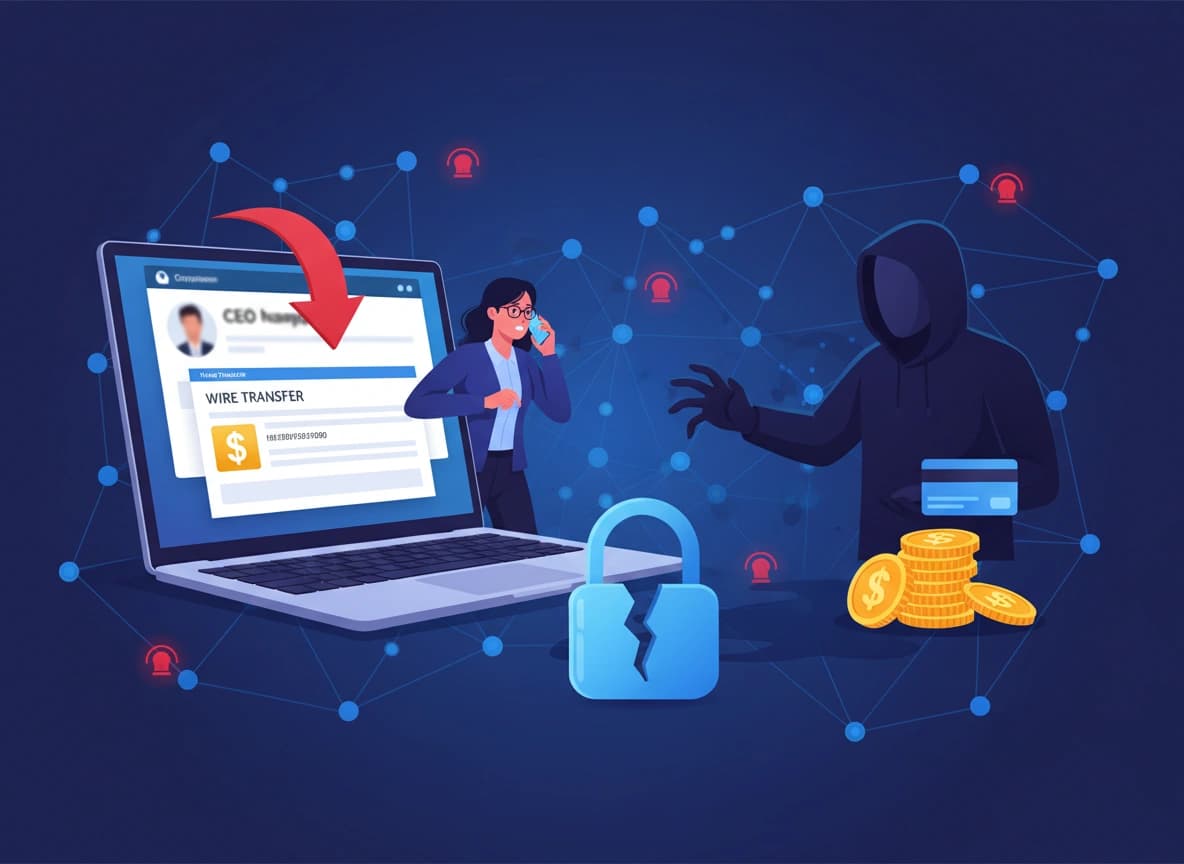
Business Email Compromise (BEC) continues to be one of the most effective and financially damaging cyber threats facing organizations worldwide. A single spoofed email can trigger losses worth millions of dollars, inflicting severe financial damage on businesses and individuals while also harming the reputation and trustworthiness of financial institutions. According to the FBI, cumulative losses from BEC scams have surpassed $55 billion worldwide, with over 305,000 reported incidents recorded since 2013.

What Is Business Email Compromise?

Business Email Compromise is a form of cybercrime in which attackers use email fraud and social engineering to trick employees, executives, vendors, or customers into transferring funds, revealing sensitive information, or changing legitimate payment processes.

How BEC Attacks Work

Business Email Compromise attacks are highly targeted cyber scams that rely on deception. Instead of exploiting software vulnerabilities, attackers exploit trust, impersonation, and human error to trick victims into transferring money, sharing sensitive information, or granting access to valuable systems.

Step 1: Reconnaissance

BEC attacks typically begin with research. Cybercriminals gather information about a target organization, its employees, executives, vendors, and business processes. They often use company websites, social media platforms, public records, and data from previous breaches to identify potential victims and understand internal workflows.

Step 2: Gaining Access or Creating a Fake Identity

Attackers can gain access by compromising a legitimate email account through credential theft or malware. They can also create a spoofed email address that closely resembles a trusted executive, vendor, or business partner. A compromised email account is particularly dangerous because emails originate from a legitimate source, making them difficult to detect.

Step 3: Monitoring Communications

In many cases, attackers quietly monitor email conversations for days or weeks. They study communication patterns, approval processes, invoice schedules, and key business relationships. This intelligence helps them create highly convincing messages that blend into normal business operations.

Step 4: Launching the Fraud

Once they understand the organization's processes, attackers initiate the scam. Common tactics include:
  • Requesting urgent wire transfers.
  • Sending fake invoices.
  • Changing vendor payment details.
  • Redirecting payroll deposits.
  • Requesting sensitive employee or customer information.
  • Asking employees to purchase gift cards on behalf of executives.
The messages are often framed as confidential, urgent, or time-sensitive to pressure victims into acting quickly without verification.

Step 5: Extracting Money or Data

If the victim complies, funds are transferred to attacker-controlled accounts or sensitive information is handed over. In some cases, attackers use stolen credentials to gain deeper access to corporate systems, enabling further fraud, espionage, or ransomware attacks.

Step 6: Covering Their Tracks

To avoid detection, attackers may delete emails, create forwarding rules, manipulate inbox settings, or maintain persistent access to compromised accounts. Some remain undetected for months while continuing to monitor communications and conduct additional fraudulent activities.

Who Are the Primary Targets?

CEOs and Senior Executives

Senior executives are among the most common BEC targets because they control payments and financial approvals. Attackers often impersonate CEOs or CFOs to pressure employees into making urgent wire transfers or processing fraudulent invoices. Since these roles have significant authority and access to company funds, a successful compromise can result in substantial financial losses.

Human Resources and People Operations Staff

HR and personnel departments are also targets because they manage sensitive employee information, including payroll records, tax documents, and personally identifiable information (PII). Cybercriminals frequently use BEC scams to steal employee data or redirect payroll deposits to fraudulent accounts, leading to identity theft and financial fraud.

IT Administrators

IT administrators possess privileged access to critical systems, networks, and security controls. If attackers compromise an administrator's account, they may be able to disable security tools, create unauthorized accounts, and move throughout the organization's environment undetected. Such access can pave the way for large-scale breaches and ransomware attacks.

New Employees

New employees may not yet be familiar with company policies, approval workflows, or procedures for verifying financial requests. Cybercriminals take advantage of their willingness to help and their tendency to comply with instructions that appear to come from managers or senior executives. For example, a newly hired employee may process a fraudulent invoice or respond to a fake payment request without recognizing the warning signs.

Why BEC Continues to Succeed

Human Psychology

The primary reason BEC remains so effective is that it exploits human behavior rather than software vulnerabilities. Attackers frequently leverage authority, urgency, fear, trust, and confidentiality A finance employee who receives what appears to be an urgent request from the CEO may prioritize speed over verification. Similarly, an employee may hesitate to question a request that seems to originate from a senior executive.

Traditional Security Controls Are Often Ineffective

Many cybersecurity defenses are designed to detect malware, malicious URLs, or suspicious file attachments. Since there is no malware involved, email security systems may struggle to identify the message as malicious. This is particularly effective when the email appears legitimate, is professionally crafted, and references ongoing business activities or projects. Even organizations with advanced endpoint protection and threat detection solutions remain vulnerable if attackers can successfully impersonate trusted individuals.

The Dangers of Attackers Compromising an Email

1. Exploiting 2FA

Many online services allow users to receive two-factor authentication (2FA) codes through email. If a cybercriminal gains access to your email account, they can also intercept the very codes designed to protect your other accounts. In effect, both your password and second authentication factor become accessible through a single compromised account.

2. Password Resets

Password reset features are designed to help users regain access to their accounts, but they can also be exploited by attackers. Once inside a victim's email account, a threat actor can initiate password resets for banking platforms, cloud services, social media accounts, and other critical systems. They can change passwords, lock out legitimate users, and take control of additional accounts.

3. Email Forwarding

One of the most effective yet overlooked tactics used by attackers is the creation of unauthorized email forwarding rules. After gaining access to an email account, the attacker configures settings to automatically forward incoming messages to an external address under their control. This allows them to monitor communications in real time without raising suspicion. Because forwarding rules often remain hidden within account settings, victims may remain unaware of the compromise for extended periods, giving attackers continuous access to sensitive information.

4. Surveillance

Rather than immediately exploiting a compromised account, some attackers choose to quietly monitor email activity over weeks, months, or even years. This approach enables them to learn about business processes, relationships, payment schedules, and ongoing projects. By remaining undetected, they can carefully plan highly convincing fraud attempts at the most opportune moment.

5. Impersonation

A compromised email account gives attackers the ability to impersonate the victim with a high degree of credibility. They can send fraudulent invoices, request wire transfers, alter payment instructions, or distribute malicious links while appearing to be a trusted colleague, executive, or business partner. In some cases, attackers may even delete sent messages or correspondence to conceal their actions. Because recipients see communications originating from a legitimate account, these attacks are often highly successful and form the foundation of many BEC schemes.

How To Defend Against BEC Attacks

Enforce Multi-Factor Authentication

Multi-factor authentication reduces the likelihood of account compromise. Organizations should prioritize phishing-resistant authentication methods such as passkeys and FIDO2 security keys whenever possible. For stronger protection, organizations and individuals should use authenticator apps instead of email-based 2FA.

Verify Financial Requests Through Secondary Channels

Organizations should establish a strict verification process for all requests involving wire transfers, vendor payment changes, payroll modifications, or access to sensitive financial information. Employees should never rely solely on email when processing such requests. Instead, they should confirm the legitimacy of the request through an independent communication channel, such as a phone call, video meeting, or secure messaging platform. This additional verification step can significantly reduce the risk of falling victim to BEC scams.

Deploy Email Authentication Standards

Implementing email authentication technologies can protect organizations against email spoofing and impersonation attacks. Security teams should deploy Sender Policy Framework (SPF), DomainKeys Identified Mail (DKIM), and Domain-based Message Authentication, Reporting, and Conformance (DMARC). Together, these controls help verify the authenticity of incoming emails, prevent unauthorized use of corporate domains, and improve overall trust in email communications.

Train Employees Continuously

Security awareness training should be an ongoing process that focuses on realistic BEC scenarios rather than generic phishing examples. Employees need to understand how attackers impersonate executives, manipulate vendor relationships, submit fraudulent payment requests, and use social engineering techniques to create urgency and bypass normal procedures. Regular training sessions, combined with simulated BEC exercises, help employees recognize suspicious requests and reinforce secure decision-making habits.

Monitor for Suspicious Account Activity

Continuous monitoring of email accounts and user activity can help organizations detect BEC attacks before significant damage occurs. Security teams should look for indicators such as logins from unusual geographic locations, impossible travel events, unauthorized mailbox rule creation, unexpected email forwarding settings, and other abnormal email behaviors. Identifying these warning signs early can enable rapid incident response and prevent attackers from maintaining access or escalating their privileges within the organization.

Use Email for Communication, Not Storage

Email should be treated as a communication tool, not a long-term storage repository for sensitive information. Storing confidential documents such as tax records, financial statements, contracts, or personal identification data in your inbox increases the potential impact of an account compromise. Sensitive files should be moved to secure storage solutions with appropriate access controls and encryption.

Limit the Personal Information You Share Online

Be mindful of the information you post on social media and other public platforms. Details such as pet names, schools attended, family relationships, birthdays, and other personal information can be valuable to cybercriminals. Attackers often use this publicly available data to guess passwords, answer security questions, or build convincing social engineering attacks. Limiting the amount of personal information you share online can reduce your exposure to identity theft and account compromise.

Conclusion

Business Email Compromise is unlikely to disappear anytime soon. As cybercriminals adopt AI-powered tools and leverage compromised accounts obtained through credential theft and infostealer infections, BEC attacks are becoming more convincing and harder to detect. Organizations that fail to address this evolving threat risk major financial losses, operational disruption, and reputational harm. Individuals should also treat their email accounts with the same level of care they give to their wallets, house keys, or bank cards. In today's digital world, an email account often serves as the gateway to financial accounts, personal information, cloud services, and online identities.

Share this article

Frequently asked questions

Newsletter

Stay in the Loop.

Subscribe to our newsletter to receive the latest news, updates, and special offers directly in your inbox. Don't miss out!