The Growing Threat of Vishing and AI Voice Cloning

The voice on the other end of the line sounds exactly like your CEO, your bank representative, or even a family member in distress. But what if it isn't them?
By Hirum KigothoTeam|Last updated: August 14, 2026|12 minutes read
cybersecurity
The Growing Threat of Vishing and AI Voice Cloning
Voice has long been one of the most trusted forms of communication, allowing people to recognize colleagues, family members, customers, and business partners simply by hearing them. But advances in generative artificial intelligence are challenging that assumption. With AI voice-cloning technology capable of producing remarkably realistic speech, cybercriminals can now impersonate trusted individuals and organizations. According to Google Mandiant, while exploits remained the most common initial infection vector in 2026, highly interactive voice phishing has surged, accounting for 11% of observed incidents and becoming the second-most common initial access vector.

What is voice phishing?

Voice phishing, or vishing, is a form of social engineering in which cybercriminals use phone calls, voice messages, or other voice-based communications to impersonate trusted individuals or organizations and manipulate victims into revealing sensitive information or taking actions that compromise their security.

AI voice cloning

AI voice cloning is a technology that uses artificial intelligence to create a synthetic version of a person’s voice based on recordings of their speech. AI models can generate highly realistic speech that sounds like the original speaker by analyzing characteristics such as tone, pitch, pronunciation, rhythm, and speaking patterns. While the technology has applications in areas such as accessibility, entertainment, and content creation, it can also be abused by cybercriminals to impersonate trusted individuals. The problem is particularly serious when the attacker knows something about the victim. A cloned voice alone may not be enough to convince someone. But a convincing voice combined with knowledge of a person's name, job title, colleagues, current projects, or organizational structure can make the interaction much more credible.

How Vishing Scams Work

Attackers typically move through several stages, gradually building trust before attempting to achieve their objective.

Reconnaissance

The attack usually begins with reconnaissance, during which the attacker collects as much information as possible about the intended victim. This information can come from social media profiles, company websites, professional networking platforms, public records, data breaches, leaked credentials, or previously compromised accounts. Attackers may look for an employee's job title, manager, colleagues, responsibilities, phone number, email address, and even information about ongoing projects. The more details an attacker has, the easier it becomes to construct a believable story and make the subsequent phone conversation appear legitimate.

Identity Preparation

After gathering information, the attacker develops a convincing identity and determines whom they will impersonate. In corporate attacks, this could be an IT administrator, help-desk employee, manager, executive, business partner, or security representative. Attackers may also impersonate a trusted service provider, bank, telecommunications company, or government agency. The objective is to select an identity that the victim would have a legitimate reason to trust, and that can plausibly make the request the attacker intends to deliver.

Initial Contact

The attacker then establishes contact with the victim, typically through a phone call, although modern campaigns can combine voice calls with email, text messages, messaging applications, or collaboration platforms. The initial communication is often designed to appear routine rather than immediately suspicious. For example, the caller may claim to be following up on an account problem, security alert, password issue, payment, or technical-support request. Attackers may also use caller-ID spoofing or other techniques to make the incoming call appear to originate from a legitimate organization or familiar number.

Voice Impersonation

AI voice cloning can make this stage more convincing by allowing attackers to generate speech that resembles a real person. A criminal may use publicly available recordings or other audio samples to create a synthetic voice that imitates an executive, colleague, family member, customer-service representative, or other trusted individual. During a live conversation, the attacker can use the cloned voice to reinforce the impersonation and make it more difficult for the victim to recognize that they are communicating with a criminal.

Social Engineering

Once communication has been established, the attacker uses social-engineering techniques to manipulate the victim into taking the desired action. A common tactic is to create a sense of urgency by claiming that an account has been compromised, a payment needs immediate approval, an employee must complete a security verification, or access will be suspended unless action is taken. Attackers may deliberately limit the victim's opportunity to think or independently verify the request. They combine urgency with authority, familiarity, and information gathered during reconnaissance, to make the fraudulent request appear both legitimate and time-sensitive.

Credential and Information Theft

After gaining the victim's trust, the attacker attempts to obtain something valuable. This could include usernames, passwords, one-time authentication codes, recovery codes, financial information, or other sensitive data. In some cases, the caller may direct the victim to a fraudulent website that resembles a legitimate login portal. The victim may be instructed to enter their credentials or authentication information while remaining on the phone with the attacker. This allows the criminal to capture the information in real time and use it before the victim realizes that the interaction was fraudulent.

Lateral Movement

A compromised account may be only the beginning of the attack. After gaining an initial foothold, criminals can search for additional accounts, applications, documents, credentials, and systems that can provide greater access. They may use the compromised identity to impersonate the victim and target colleagues, access sensitive business information, or obtain higher privileges.

Types of Vishing Scams

Family Emergency Scams

Family emergency scams use AI-generated voices to impersonate a relative who supposedly needs immediate assistance. The attacker may claim that the relative has been involved in an accident, arrested, hospitalized, or stranded and urgently needs money. The caller may then instruct the victim to transfer funds or provide financial information. These attacks are particularly effective because they exploit emotional responses rather than relying solely on technical deception. When someone believes that a loved one is in immediate danger, fear and urgency can override normal skepticism.

Bank and Financial Institution Impersonation

In bank impersonation scams, criminals use AI-generated voices to pose as representatives of banks or other financial institutions. The caller may claim that suspicious activity has been detected on the victim's account, that a transaction needs to be reversed, or that the customer's identity must be verified. The victim may then be asked to provide account information, passwords, one-time passcodes, or other authentication details. Attackers often combine the voice call with spoofed text messages or emails to reinforce the legitimacy of the story. They may also possess partial information about the victim obtained from previous data breaches, leaked databases, or compromised accounts, making the conversation appear more credible and convincing.

IT Help-Desk Scams

InnIT help-desk scams, attackers can use a cloned voice to pose as an internal IT employee or support technician. The supposed technician may claim that the employee's account has experienced a security problem and that immediate action is required. The victim could then be asked to reset a password, approve an MFA request, disclose an authentication code, or install remote-access software. Once the attacker gains access, the compromised account can be used to reach corporate applications, internal systems, and sensitive information.

Customer-Service and Technical-Support Impersonation

Attackers can also clone the voices of customer-service representatives or technical-support personnel and contact individuals claiming to help resolve an account or device problem. The caller may create a sense of urgency by claiming that the victim's account is compromised or that immediate verification is required to prevent unauthorized activity. The victim may subsequently be directed to a fraudulent website, asked to reveal authentication information, or persuaded to grant remote access to a device.

Government and Law-Enforcement Impersonation

Another use of AI voice cloning involves impersonating government officials, law-enforcement personnel, tax authorities, or other public institutions. The attacker may claim that the victim is under investigation, has an outstanding payment, or must provide information to resolve an alleged legal or administrative issue. Threats of penalties, arrest, or other consequences are used to create fear and discourage the victim from questioning the request.

CEO Fraud

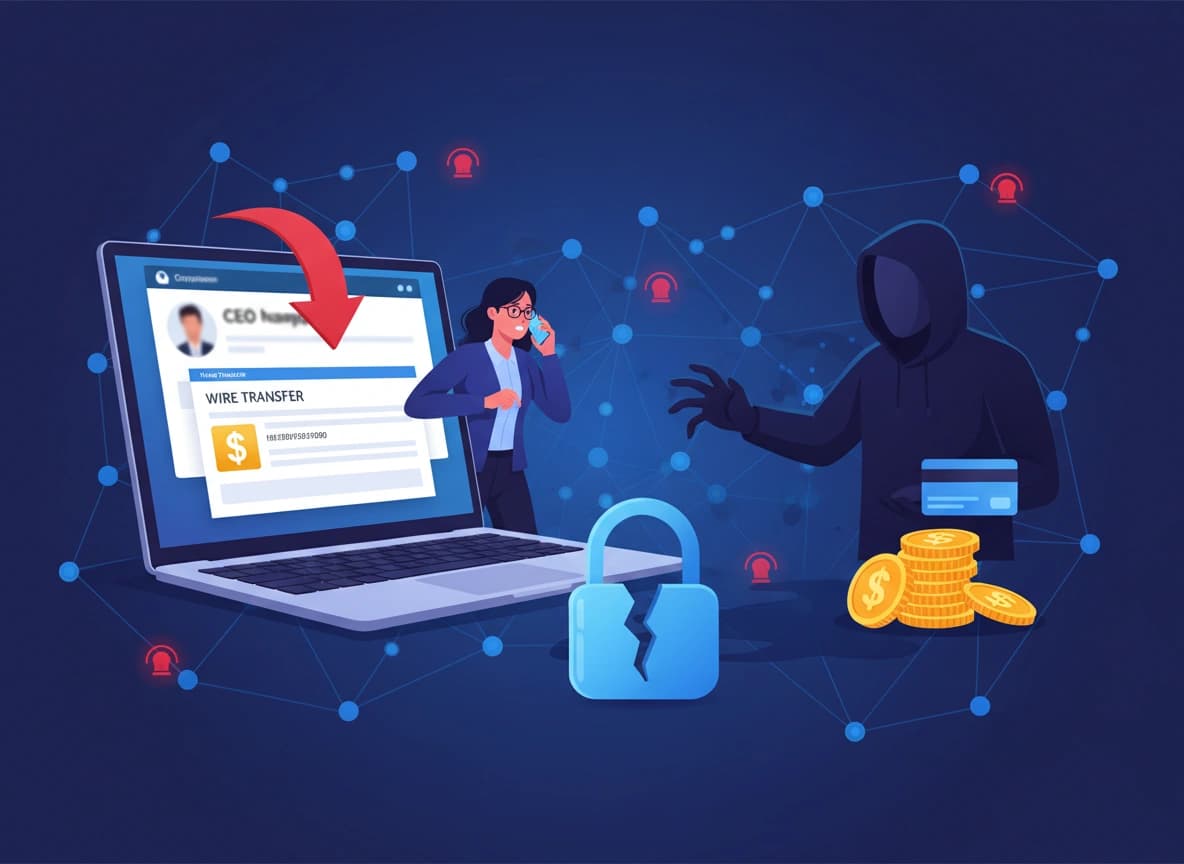
CEO fraud is one of the most financially damaging forms of AI-powered voice impersonation targeting organizations. In these attacks, criminals use a cloned voice to impersonate a CEO, senior executive, or other authority figure and contact employees, often those in finance or accounting, with an urgent request to transfer funds or approve a payment. Attackers may deliberately make the request outside normal working hours or claim that the transaction is confidential, reducing the chances that the employee will independently verify it with the executive.

How organizations can defend against AI-powered vishing

Establish independent verification

Employees should verify unexpected requests through a separate, trusted channel. If an executive calls asking for a sensitive action, the employee should not verify the request by calling the same number back. Instead, they should use a previously established corporate contact method.

Create strict help-desk procedures

Account recovery and authentication resets should require strong verification. Help-desk personnel should not be able to override established identity controls merely because a caller sounds convincing or knows internal information.

Train employees for AI impersonation

Organizations should implement structured, role-based cybersecurity awareness training that specifically covers the risks posed by AI-powered voice-cloning scams. Training should teach employees how to recognize common social-engineering tactics, follow established identity-verification procedures, and respond appropriately to urgent or suspicious requests without allowing pressure or perceived authority to influence their decisions.

Report Suspected AI Voice-Cloning Scams

Individuals who encounter suspected AI voice-cloning scams should report them to the appropriate authorities and organizations. Organizations should additionally notify their internal security teams so that other employees can be warned about similar attempts. Early reporting can help authorities identify recurring campaigns, connect related incidents, and alert other potential victims before attackers can reuse the same impersonation techniques.

The future

The next generation of AI voice attacks is likely to be even more sophisticated. Attackers may use AI voice cloning to respond to verification questions. Combining deepfake video with cloned voices could also make live video calls with fake identities difficult to distinguish from genuine interactions. At the same time, defensive technologies are advancing. Researchers are developing watermarking techniques that embed identifiers into synthetic speech, although widespread adoption remains limited. Legal and regulatory frameworks are evolving as well. Courts and compliance teams will need to determine how voice recordings should be treated as evidence as voice cloning becomes more prevalent and the authenticity of audio becomes harder to establish.

Share this article

Frequently asked questions

Newsletter

Stay in the Loop.

Subscribe to our newsletter to receive the latest news, updates, and special offers directly in your inbox. Don't miss out!