Protecting your game IP while working with other teams

Practical security habits for game developers protecting IP, code, assets, and collaboration across trusted teams and partners.
By Tim UhlottFounder|Last updated: June 13, 2026|7 minutes read
game developmentlegalcollaboration
Protecting your game IP while working with other teams
Game development is rarely just one person and one folder anymore. Even small games often involve programmers, artists, composers, QA testers, publishers, translators, and outside tools. That teamwork is great, but it also means your best ideas, code, assets, and plans move through many hands before launch. For a game studio, intellectual property, or IP, is not only the final game on Steam, console, or mobile. It is also the source code, shaders, tools, character art, animations, music, dialogue, design documents, prototypes, build scripts, backend systems, and unreleased plans. If these things leak or become unclear in ownership, the damage can be serious. A copied mechanic might hurt your launch. A leaked build can spoil the surprise. A missing contract can create a fight over an asset. The goal is not to make collaboration scary. It is to make teamwork clean and safe, so people can move fast without giving away the project.

Know what you are protecting

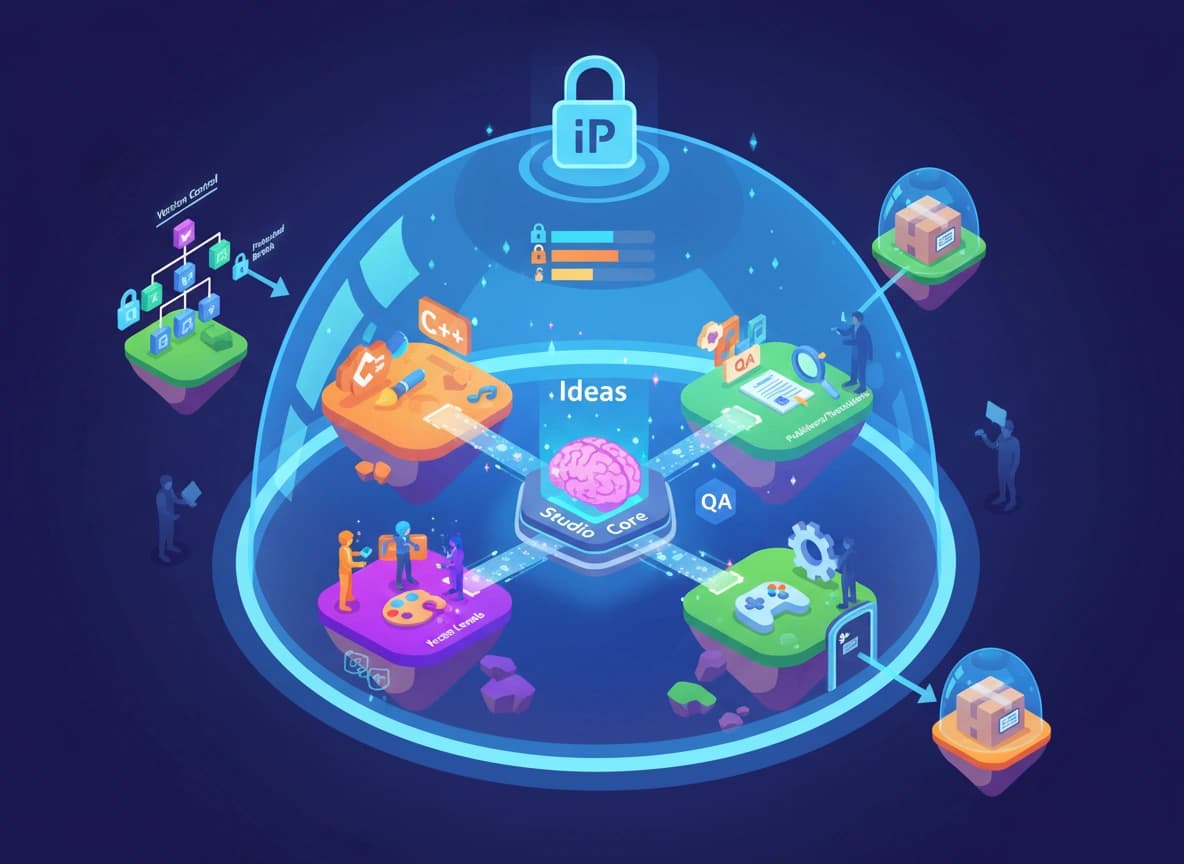
Different parts of a game are protected in different ways. Copyright usually protects original code, art, music, writing, and other creative work when it is created. Trademarks can protect your game name, studio name, and logo. Trade secrets can protect private information like source code, algorithms, tools, unreleased mechanics, and production plans, but only if you actually keep them secret. That last part matters. If every freelancer, friend, and test group gets access to the full project folder, it becomes harder to say you treated the project as secret. Good security habits also support the legal side of protecting your work. For teams, contracts are as important as passwords. If someone creates code, art, music, or a trailer for your game, make sure the agreement says who owns it and how it can be used. This is especially important with freelancers and external studios. Paying for work does not always mean you own every right to it.

Give people the access they need, not everything

Secure collaboration starts with a simple rule: people should only access what they need for their job. A gameplay programmer may need the full codebase, but a translator probably only needs text files and screenshots. A composer does not need server keys. A QA tester may need a build, but not the private repository. A publisher may need milestone builds, marketing assets, and sales data, but not every internal experiment. This is called least privilege. It sounds formal, but it is just common sense. Less access means fewer mistakes, fewer leaks, and less damage if an account is compromised. Use separate user accounts, not shared passwords. Turn on two-factor authentication for source control, build servers, cloud storage, and chat tools. When someone leaves, remove their access quickly. Offboarding is easy to forget during a busy milestone, but old accounts are a common weak spot.

Use version control like a security tool

Version control is not only for undoing bugs. It is also one of the best ways to manage trust between teams. For small and code-heavy teams, Git with Git LFS can work well, especially if you set it up before the repository grows. On GitHub, use pull requests, branch protection, required reviews, and clear rules for who can merge into main or release branches. Keep API keys, private certificates, and store credentials out of the repository. Unity teams can also look at Unity Version Control, which is made for game and real-time 3D projects, large files, artist and programmer workflows, and code reviews. For larger game teams, especially teams with many binary assets, Perforce is popular for a reason. It handles huge depots, large art files, and file locking very well. File locking matters because two artists cannot safely merge the same binary texture or Unreal asset like programmers can merge text code. Perforce also supports detailed permissions, even down to paths and branches. That is useful when an external partner only needs one platform port, one DLC folder, or one art package. Whatever tool you use, make code review normal. Reviews catch bugs, risky changes, secret leaks, license problems, and accidental commits of private files.

Be careful with builds and external partners

Many leaks do not come from source code access. They come from builds. Watermark builds when possible, especially preview builds for press, influencers, contractors, or publishers. Keep a record of who received which build. Do not include debug menus, admin commands, or secret server endpoints in public or partner builds unless they are truly needed. For multiplayer games, move important decisions to the server when you can. The client should not be trusted with final score, premium currency, matchmaking rules, or inventory ownership. If the client can decide it, someone can often change it. This is where obfuscation and anti-cheat can help, but they are extra layers. Obfuscation can make shipped code harder to read or modify, which can slow down cheat makers and reverse engineers. Anti-cheat can detect tampering, suspicious tools, or strange player behavior. But neither one is magic. A strong game still needs server-side checks, good logging, patching, and smart design.

Make security part of the workflow

The best protection is boring in a good way. Clear contracts. Clear access. Clear review rules. Clear build handling. Clear offboarding. Write down who owns what. Keep private work private. Split access by role. Use version control with reviews and protected branches. Lock binary assets when needed. Keep secrets out of code. Remove access when people leave. Treat builds like valuable files, not random zip files. Game development is already hard enough. Good IP protection should not slow the team down with fear. It should create trust. When everyone knows the rules, teams can share ideas, move faster, and protect the world they are building together.

Share this article

Frequently asked questions

Newsletter

Stay in the Loop.

Subscribe to our newsletter to receive the latest news, updates, and special offers directly in your inbox. Don't miss out!