Learning From Crypto Heists: Cybersecurity Lessons From Recent Crypto Hacks

Cryptocurrency hacks are becoming more costly, with billions of dollars stolen from exchanges and blockchain platforms in major cyberattacks. But what went wrong, and what can businesses, developers, and individual users learn from these attacks? This article explores recent crypto heists and the cybersecurity lessons they reveal.
By Hirum KigothoTeam|Last updated: November 23, 2026|14 minutes read
cybersecurityblockchain
Learning From Crypto Heists: Cybersecurity Lessons From Recent Crypto Hacks
Blockchain technology was developed with the promise of delivering strong security, greater transparency, and decentralization. It delivers this through cryptographic techniques, distributed networks, and tamper-resistant ledgers, making it one of the most security-focused innovations in the digital world. Nevertheless, these protections have not prevented the cryptocurrency industry from suffering some of the costliest cyberattacks in modern history. On October 29, the world's largest cryptocurrency exchange, Binance, disclosed a major security breach that resulted in approximately $6.3 billion in stolen funds, more than four times the previous record. The incident followed another massive cryptocurrency theft in February 2025, when Bybit suffered a $1.5 billion loss. So, what can we learn from these attacks, and what should blockchain developers, businesses, and cryptocurrency users do to protect their digital assets? This article looks into some of the recent cryptocurrency hacks and the security lessons they reveal.

1. Humans Remain the Biggest Weakness

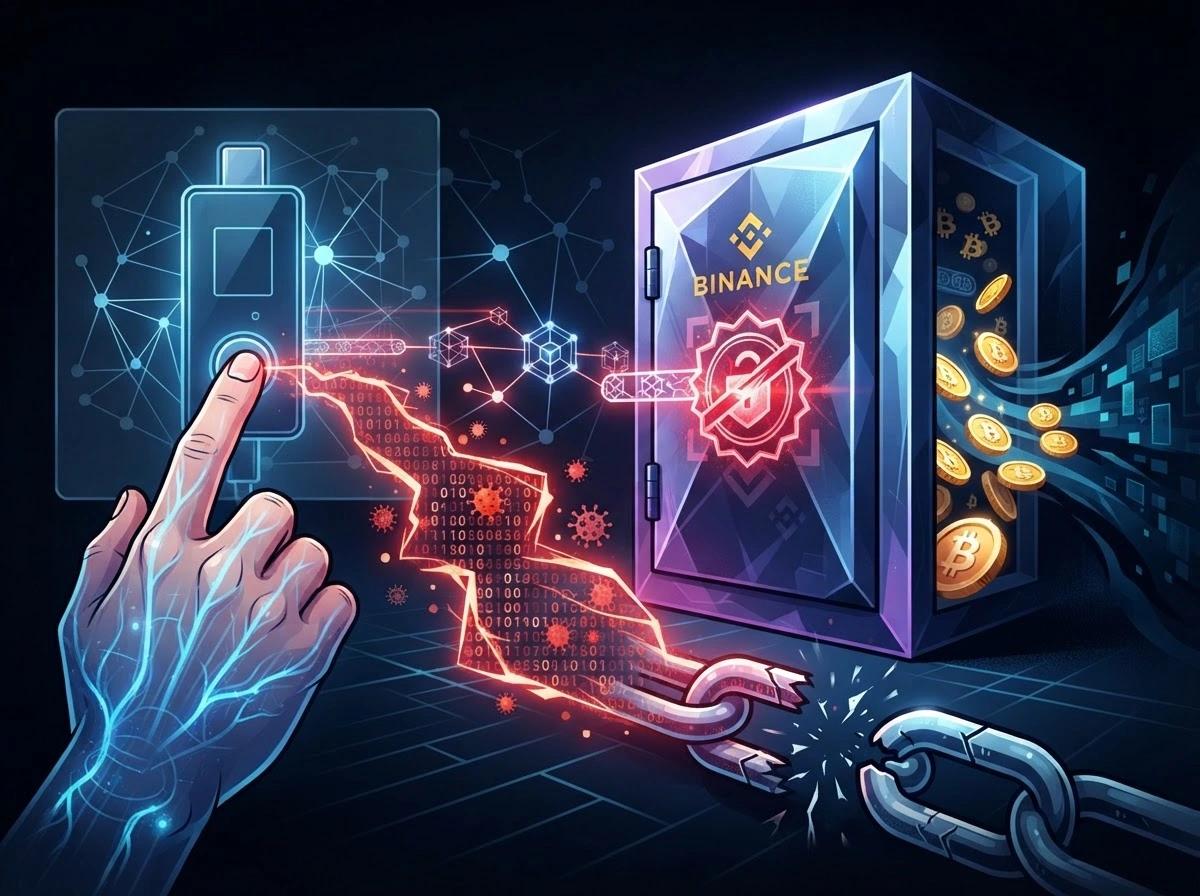
Some of the most recent damaging attacks began through sophisticated social engineering tactics. Social engineering involves tricking individuals into revealing sensitive information, granting access, approving transactions, or installing malicious software. The North Korean hacking group "TraderTraitor" is known to use social engineering tactics to steal crypto. In the recent Binance heist, the attackers first contacted a Binance software engineer through a well-known recruitment platform, pretending to be a project director from a company. During the first round of video interviews, they shared a social media account containing personal photos and videos to build trust. In the second round, they arranged for someone claiming to be a "CEO" to continue the interview via chat software and, before concluding, instructed the engineer to download a "coding assignment" to their work computer. This assignment actually contained malicious code that replaced a development tool and established communication with an attacker-controlled server. The attackers used this compromised computer in conjunction with internal AI tools to pivot to other engineers on the wallet team, steal deployment credentials, and ultimately reach the wallet signing service, resulting in the theft of approximately $6.3 billion. This demonstrates that humans often remain the weakest link in cybersecurity. Even organizations with advanced security systems, strict access controls, and strong encryption can be compromised when employees are tricked into making unsafe decisions. Attackers understand that exploiting human emotions, trust, curiosity, or the desire for new career opportunities can sometimes be easier than breaking through technical defenses.

2. Cold Wallets Are Not Completely Hack-Proof

Cold wallets hold a pair of private and public keys that owners use to manage cryptocurrency assets and sign transactions while offline. The process works as follows: transactions are first initiated online, then transferred to the cold wallet e.g., a USB drive, where they are digitally signed before being returned to the online network. Because private keys do not come into contact with online servers during the signing process, hackers cannot access them through conventional web-based attacks. However, attackers have found several ways to obtain private keys or recovery phrases without directly hacking a cold wallet. Phishing campaigns, for example, involve impersonating wallet providers or customer support representatives to trick users into revealing their recovery phrases. Malware can also compromise connected computers, replace cryptocurrency addresses, or manipulate transactions before users approve them. Supply chain attacks are another major threat, in which hardware wallets are intercepted during shipment or purchased by malicious resellers and tampered with before reaching the end user. In 2026, Ledger confirmed that certain hardware wallets sold through third-party resellers in Southeast Asia and Berlin were physically tampered with before reaching users. The modified devices could capture the recovery phrase during setup and send it to an attacker.

3. Third-Party Software Can Become Entry Points for Attackers

Blockchain organizations depend on external software, development tools, cloud services, browser extensions, and infrastructure providers. These tools help developers build applications, manage wallets, monitor transactions, and maintain blockchain networks. However, third-party software can introduce security risks when attackers compromise these applications or distribute malicious versions of trusted tools. Instead of attacking a company's systems directly, cybercriminals compromise a software provider, development tool, update mechanism, or external service that the organization trusts. The October 2026 Binance incident provides an important example of this risk. According to Binance's investigation, attackers used a tampered Homebrew installation to compromise a developer's device while the employee was installing an AI coding tool. Binance detected the activity, replaced the device, and rotated credentials, but attackers had already mapped the engineer's role and wallet infrastructure colleagues

4. Fast Incident Response Is Crucial

Unlike traditional financial institutions, which may sometimes reverse fraudulent transactions or freeze accounts, decentralized blockchain networks do not always have a central authority capable of stopping unauthorized transfers. Once attackers gain control of a wallet or smart contract, they may move stolen assets across multiple networks, exchange them for other cryptocurrencies, or use mixing services to make tracing more difficult. This means organizations must be able to identify suspicious activity and respond quickly. Following the October 29 attack, Binance suspended withdrawals, coordinated with cryptocurrency issuers and other industry participants, and took steps to freeze affected assets. Binance worked directly with major stablecoin issuers and blockchain partners to intercept and blacklist stolen tokens on-chain. The company reported that approximately $2.85 billion had been frozen or intercepted. Binance pledged to absorb 100% of the losses using its corporate treasury and Secure Asset Fund for Users (SAFU), reporting that 98% of impacted token balances were replenished by November 3. This response shows the importance of having a well-prepared incident response plan. Rapid response limits the impact on customers and helps restore confidence in the affected platform.

5. Decentralization Does Not Eliminate the Need for Strong Access Controls

Decentralization is one of blockchain technology's defining characteristics. Instead of relying on one central authority, distributed networks allow multiple participants to validate transactions and maintain records. However, many blockchain applications still rely on centralized administrative functions. For example, developers may have permission to update smart contracts, administrators may control protocol settings, and security councils may approve important changes. If these privileges are poorly managed, attackers can exploit them to take control of an entire platform. On April 1, 2026, hackers stole $285 million worth of crypto from Drift Protocol. Attackers linked to the North Korean state-sponsored group UNC4736 bypassed Drift’s code security entirely by compromising the human operators holding privileged access. Drift relied on a 2-of-5 Security Council multisig to manage emergency actions and protocol upgrades. Compromising just two signers handed full administrative control to the attackers. The absence of an adequate delay between certain administrative changes and their execution also reduced the opportunity to identify and stop the attack.

6. Users Must Take Security Seriously

Although cryptocurrency exchanges and blockchain developers have major responsibility for protecting digital assets, individual users also need to understand the security risks. There are several precautions cryptocurrency users should follow:

Protect Recovery Phrases and Private Keys

Never disclose your wallet's recovery phrase or private keys to anyone, regardless of who they claim to represent. These details provide access to your cryptocurrency holdings, meaning anyone who obtains them may be able to restore your wallet on another device and transfer your funds without your permission. Wallet manufacturers, cryptocurrency exchanges, and customer support representatives will never need your recovery phrase to troubleshoot an issue. Store recovery phrases offline in a secure location rather than saving them in emails, cloud storage services, screenshots, or online documents where attackers could find them.

Use Hardware Wallets for Valuable Holdings

Hardware wallets provide an additional layer of protection by keeping private keys isolated from internet-connected computers and smartphones. This makes it considerably more difficult for remote attackers to steal sensitive wallet information through malware or other conventional online attacks. Users who hold significant amounts of cryptocurrency should consider moving their assets from hot wallets to reputable hardware wallets. However, purchasing a hardware wallet is not enough on its own. Always obtain devices from manufacturers or verified distributors, check for signs of physical tampering, and follow the official setup instructions to ensure the device has not been compromised before reaching you.

Verify Transactions Before Approving Them

Always review transaction details before signing or authorizing a cryptocurrency transfer. Check the recipient's wallet address, the amount being sent, and any associated network fees to ensure everything matches your intentions. This is particularly important when interacting with decentralized applications (dApps) and smart contracts, which may request permission to access or transfer tokens from your wallet. Some malicious applications exploit these approval mechanisms to gain extensive access to users' funds. Avoid signing transactions you do not understand, and regularly review and revoke unnecessary token approvals to limit the damage if a previously trusted application becomes compromised.

Watch Out for Fake Wallet Applications

Cybercriminals frequently distribute fraudulent cryptocurrency wallet applications to steal login credentials, private keys, and recovery phrases. Some imitate popular wallet brands so closely that unsuspecting users may struggle to distinguish them from the real software. Always download wallet applications through official manufacturer websites or verified application stores, and double-check the developer's identity, application name, and download source before installation. Be especially cautious of advertisements, search engine results, and unsolicited messages directing you to wallet downloads, as these may lead to malicious websites or counterfeit applications.

Enable Additional Account Protection

Use strong, unique passwords for cryptocurrency exchanges, wallet-related accounts, and the email addresses associated with them. Where available, enable multifactor authentication (MFA) to introduce an additional verification step when signing in or performing sensitive account operations. Authenticator applications or hardware security keys are generally preferable to SMS-based verification because text messages can be intercepted through SIM-swapping attacks and other techniques. Users should also secure their email accounts, as attackers who gain access to an inbox may exploit password-reset mechanisms to compromise connected cryptocurrency services.

Beware of Phishing Scams

Fraudsters often impersonate cryptocurrency projects, blockchain developers, recruiters, investment advisers, and well-known industry figures to convince victims to send money or disclose sensitive information. They may promise guaranteed returns, offer exclusive token sales, or invite users to participate in supposedly profitable investment schemes. Others create fake job opportunities or developer collaborations to distribute malware and steal cryptocurrency credentials. Treat unsolicited investment offers with suspicion, research projects independently, and never rush into transferring funds because of promises of limited-time profits. Users should also remember that a professional-looking website, verified social media account, or familiar company name does not automatically make an investment opportunity or cryptocurrency service legitimate. Attackers can impersonate established brands, compromise genuine accounts, and create convincing copies of trusted platforms. Always verify requests through independent official channels before sharing information, connecting a wallet, downloading software, or transferring cryptocurrency.

Avoid Relying Entirely on Cryptocurrency Exchanges to Store Your Assets

Although cryptocurrency exchanges provide convenient ways to buy, sell, and manage digital assets, keeping all your holdings on an exchange exposes you to risks beyond your control. Exchanges can suffer security breaches, become targets of ransomware attacks, experience operational failures, or even collapse, leaving customers unable to access their funds. Whenever possible, consider transferring long-term cryptocurrency holdings to wallets where you control the private keys, particularly reputable hardware wallets.

Diversify Asset Storage Across Wallets and Services

Avoid keeping all your cryptocurrency in a single wallet or storage solution. Distributing assets across multiple wallets and, where appropriate, different services can reduce the financial impact of a security breach or compromised account. For example, users might keep smaller amounts in hot wallets for everyday transactions, store long-term holdings in hardware wallets, and maintain separate wallets for interacting with decentralized applications.

Conclusion: Blockchain Security Must Go Beyond the Technology

Although blockchain technology itself is very difficult and impractical to hack, the broader ecosystem is vulnerable. The Binance and Drift Protocol incidents show how attackers can exploit the people and infrastructure surrounding blockchain platforms to steal enormous amounts of digital assets. They also demonstrate that sophisticated cyberattacks do not always require attackers to break encryption or discover previously unknown software vulnerabilities. Sometimes, compromising a trusted employee is enough. As cryptocurrency adoption grows and blockchain technology becomes integrated into financial services and business operations, attackers will continue looking for weaknesses in the systems that support it. Blockchain developers, cryptocurrency exchanges, and individual investors must therefore take cybersecurity seriously. Ultimately, blockchain security is only as strong as the people, applications, and infrastructure responsible for protecting it.
00 views
00 shares

Discussion about this post

Comments are reviewed before they appear on the article.

No comments yet. Be the first to start the discussion.
Frequently asked questions

Newsletter

Stay in the Loop.

Subscribe to our newsletter to receive the latest news, updates, and special offers directly in your inbox. Don't miss out!