Cryptojacking Explained: How Attackers Hijack Your Devices to Mine Cryptocurrency

Cybercriminals can secretly take advantage of your device’s processing power, electricity, and cloud resources to generate profit while leaving you to deal with the consequences.
By Hirum KigothoTeam|Last updated: October 2, 2026|9 minutes read
cybersecurity
Cryptojacking Explained: How Attackers Hijack Your Devices to Mine Cryptocurrency
Cryptojacking is a stealthy form of cyberattack that can operate without raising suspicion. Unlike ransomware, it does not encrypt your files or display a ransom demand. Instead, it secretly uses your device's computing resources to mine cryptocurrency for the attacker. In this article, we’ll look at what cryptojacking is, how cybercriminals carry it out, the warning signs to watch for, and the steps you can take to protect your devices.

What Is Cryptojacking?

Cryptojacking is the unauthorized use of another person's computing resources to perform cryptocurrency mining. The process of creating new cryptocurrency is known as mining. Miners compete to solve complex mathematical problems, and the first miner to find the correct solution receives a cryptocurrency reward. Mining can require substantial processing resources, and the hardware consumes a lot of electricity while performing those calculations. In a legitimate mining operation, the owner pays for the hardware and electricity and receives the resulting rewards. With cryptojacking, the attacker attempts to shift those costs to somebody else. The victim's computer provides the processing power. The victim's electricity powers the device. Any cryptocurrency earned through the operation is automatically sent to a wallet under the attackers’ control.

How Does Cryptojacking Work?

1. Host-Based Cryptojacking

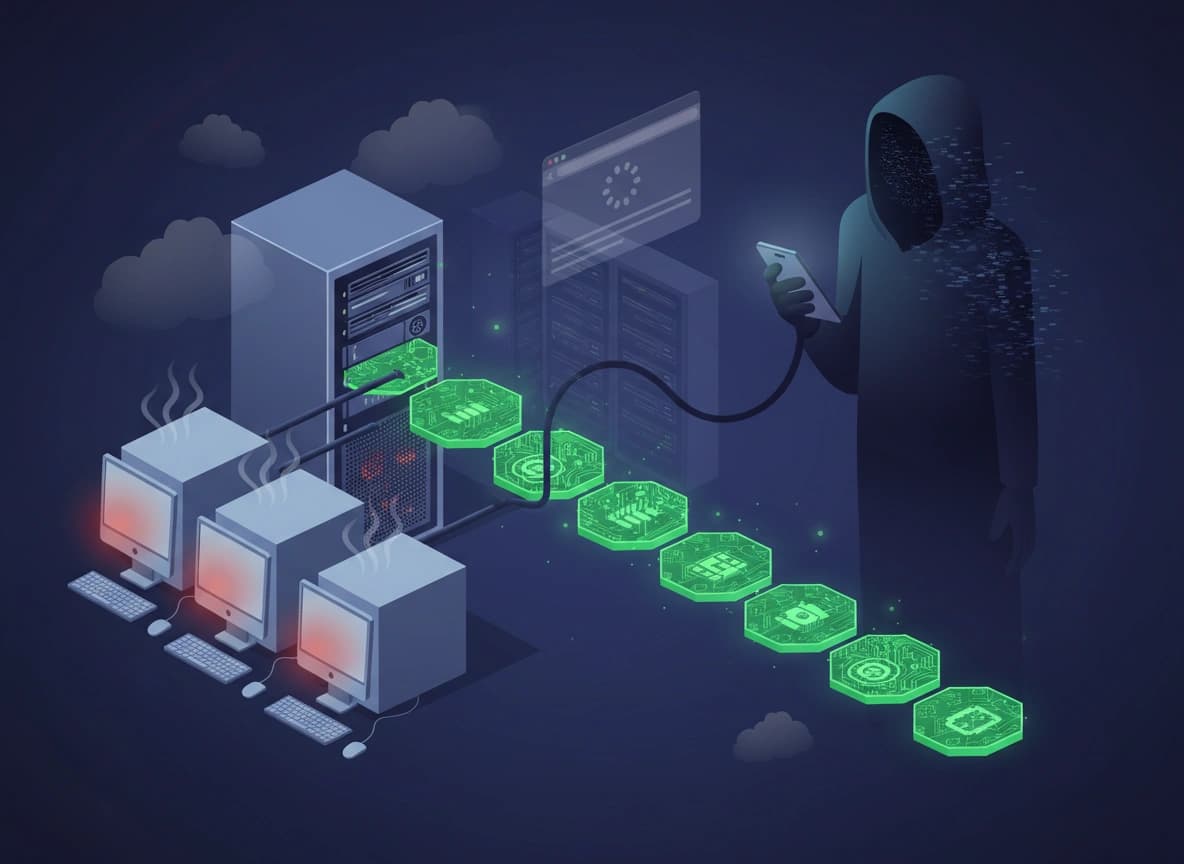
Host-based cryptojacking occurs when attackers place mining malware directly on a victim’s computer or server. To gain access, cybercriminals may rely on phishing messages that persuade users to open malicious attachments, download compromised applications, or install Trojanized software. After infection, the malware secretly uses the device’s CPU and GPU resources to mine cryptocurrency. Because the malicious program runs directly on the operating system, it can stay active for extended periods, consuming significant processing power and causing excessive heat and sluggish performance.

2. Browser-Based Cryptojacking

Browser-based cryptojacking uses code running inside a web browser to perform cryptocurrency mining. Some websites run cryptocurrency-mining scripts through JavaScript in the browser, quietly using a visitor’s computing resources to mine digital currency. The activity ends once the user closes the webpage or browser tab. This approach does not require software to be downloaded or installed, so it leaves no mining program behind on the device and may be more difficult to identify.

3. Compromised Cloud Infrastructure

Cryptojacking is moving beyond personal computers and into cloud environments. Attackers can use stolen or exposed cloud credentials to gain access to an organization's account and secretly deploy virtual machines or GPU instances for cryptocurrency mining. Because the computing resources belong to the victim, the attacker can carry out mining operations while the organization absorbs the costs.

4. Supply Chain Cryptojacking

Attackers do not always need to compromise a company's systems directly to launch a cryptojacking campaign. They can also hide cryptocurrency-mining malware inside software, container images, or other components that developers and organizations routinely download and use. For example, cybercriminals have uploaded malicious Docker images containing hidden mining code to public repositories. Developers may unknowingly pull these images into their applications or cloud environments, giving the attackers access to computing resources. Some malicious images have been downloaded more than 100,000 times before being discovered and removed. Attackers can also take advantage of vulnerable drivers, outdated software, and weaknesses in software supply chains to gain access to systems. Once inside, they can deploy mining software and attempt to keep it running for long periods. Because the malicious activity may be hidden within legitimate development tools or infrastructure, organizations may not immediately realize that their computing resources are being used to mine cryptocurrency for someone else.

What Are the Risks of Cryptojacking?

Performance Degradation

Cryptojacking consumes the CPU, GPU, memory, and other computing resources of infected devices. As a result, computers and servers may become slower, and applications can take longer to respond.

Higher Energy Consumption

Cryptocurrency mining requires significant computing power, which increases electricity consumption. On infected computers, this can lead to higher energy bills. For organizations running large numbers of servers or cloud instances, the additional power usage can become expensive if the mining activity continues for an extended period.

Hardware Damage

Cryptocurrency mining places a heavy workload on a device's processor, which can generate considerable heat. This places additional stress on cooling systems and hardware components. Prolonged cryptojacking activity may therefore contribute to premature hardware wear and reduce the expected lifespan of affected devices.

Unexpected Cloud Costs

When attackers use stolen cloud credentials to create mining instances, the victim is responsible for the resulting cloud usage charges. A single compromised account can be used to deploy multiple high-performance instances. If the activity remains unnoticed, organizations can receive unexpectedly large bills.

Security and Privacy Risks

Cryptojacking indicates that an attacker has already gained unauthorized access to a device, server, or cloud account. The mining operation itself may be the most visible part of the compromise, but the attacker could have access to other systems, credentials, files, or sensitive information. This makes cryptojacking a warning sign of a bigger security problem. Attackers also establish persistent remote access that could lead to data theft, lateral movement, or ransomware activity. This is why organizations shouldn't simply kill the mining process and consider the incident finished. If a crypto miner is discovered, security teams should investigate how it got there in the first place.

How to Protect Against Cryptojacking

1. Be Careful With Downloads

Users should download applications from trustworthy sources and be suspicious of unexpected software, fake updates, and programs distributed through questionable websites.

2. Use Ad Blockers

Consider using a reputable ad blocker to reduce the risk of browser-based cryptojacking. An ad blocker can prevent JavaScript-based mining scripts and the domains that deliver them from loading, adding an extra layer of protection while browsing.

3. Keep Software Updated

Security patches can close vulnerabilities that attackers might otherwise exploit to gain access to computers, servers, and cloud infrastructure.

4. Secure Cloud Accounts

Organizations should follow the principle of least privilege so that compromised credentials cannot automatically create large amounts of expensive infrastructure. Cloud administrators should also monitor resource creation and establish spending alerts.

5. Monitor Your Device

Keep an eye on your device's performance and resource usage. Regularly checking CPU and GPU activity can help you spot unusual spikes that may indicate a hidden cryptocurrency miner. If your device becomes unusually slow, overheats, or shows consistently high processor usage when you are not running demanding applications, investigate the cause.

What Should You Do If You Suspect Cryptojacking?

If a personal computer suddenly becomes extremely slow and the CPU remains heavily loaded without an obvious explanation, start by checking which applications and processes are consuming the resources. Close suspicious browser tabs and applications. Run a security scan using a reputable security product and install available operating-system and software updates. If the problem continues, investigate recently installed applications, browser extensions, scheduled tasks, and other mechanisms that could allow unwanted software to restart. For businesses, the response should be more structured. Security teams should isolate the affected machine or cloud workload when appropriate, preserve relevant logs, identify the initial access method, remove the miner, investigate persistence mechanisms, and determine whether the attacker accessed anything beyond cryptocurrency-mining resources. Cloud credentials should be reviewed and rotated when compromise is suspected. Simply deleting the mining software may not be enough if the attacker still has access.
00 views
00 shares

Discussion about this post

Comments are reviewed before they appear on the article.

No comments yet. Be the first to start the discussion.

Frequently asked questions

Newsletter

Stay in the Loop.

Subscribe to our newsletter to receive the latest news, updates, and special offers directly in your inbox. Don't miss out!