Cybercriminals Escalate Attacks on Critical Infrastructure

From hijacked dams to ransomware that shuts down fuel pipelines, critical infrastructure is under attack globally.
By Hirum KigothoTeam|Last updated: May 13, 2026|11 minutes read
cybersecurity
Cybercriminals Escalate Attacks on Critical Infrastructure
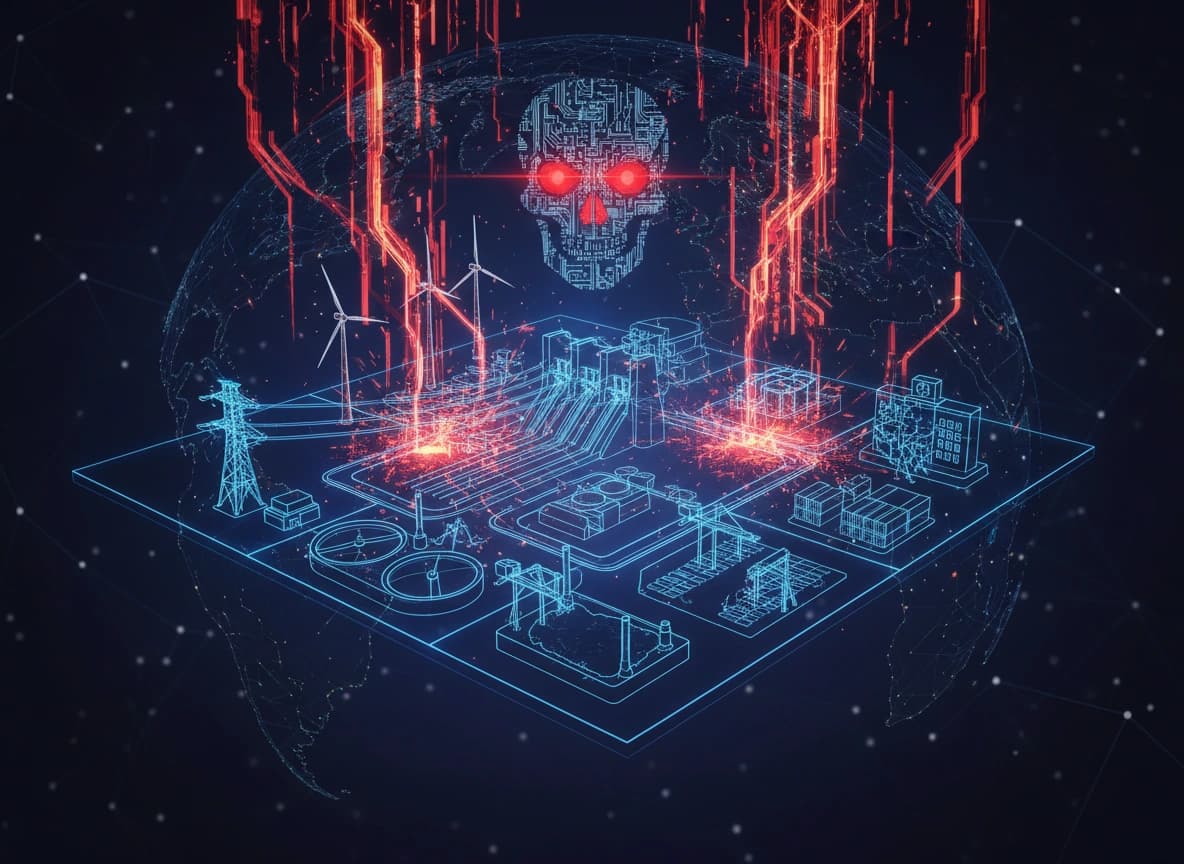
Over the last few years, cybersecurity researchers and government agencies have warned that attacks against operational technology (OT) and industrial control systems (ICS) are growing in both frequency and sophistication. Unlike traditional IT systems, these environments control physical processes in the real world. A successful breach can disrupt electricity, contaminate water supplies, halt manufacturing operations, or cripple emergency services. A report from KnowBe4 found that global critical infrastructure was hit by more than 420 million cyberattacks between January 2023 and January 2024, averaging about 13 attacks every second. While the United States remained the most heavily targeted, the report showed that 163 other countries also faced attacks on critical infrastructure, with many incidents linked to state-sponsored threat actors.

Major Cyber Attacks Targeting Critical Infrastructure in Recent Years

Colonial Pipeline Attack (2021)

In 2021, Colonial Pipeline, the largest fuel pipeline operator in the United States, suffered a major ransomware attack that forced the company to shut down operations completely. The pipeline supplied more than 45% of the East Coast’s gasoline, diesel, and jet fuel, making the disruption one of the most significant cyber incidents affecting critical infrastructure in U.S. history. The company eventually paid approximately $5 million in ransom, and it took 11 days before operations were partially restored. Although investigators never publicly confirmed the exact method used to breach the network, the impact of the attack was immediate and widespread.

Norway Dam Attack (2025)

Hackers briefly took control of a dam in Norway, releasing millions of gallons of water before the intrusion was halted. The attackers opened a floodgate at the Bremanger Dam in western Norway, allowing water equivalent to roughly three Olympic-sized swimming pools to flow out during the four hours they maintained access to the dam’s computer systems.

Poland (2025-2026)

Poland’s intelligence agency said it uncovered cyberattacks targeting five water treatment facilities where hackers could have seized control of industrial systems, including, in the worst-case scenario, interfering with water safety operations. Earlier in 2026, threat actors also targeted two heat and power plants while attempting to disrupt communication links between renewable energy infrastructure, such as wind turbines, and power distribution operators. Authorities warned the attacks could have disrupted heating and electricity services for at least half a million homes nationwide. Investigators also discovered a destructive malware known as DynoWiper designed to permanently erase data and render computer systems inoperable.

Effects of Attacks on Critical Infrastructure

Water Facilities

Security researchers have documented multiple incidents where attackers gained access to water treatment plants and attempted to manipulate industrial equipment. In some cases, hackers targeted systems responsible for regulating chemical levels in drinking water. Even though the attacks were stopped before causing harm, they revealed how vulnerable essential public services have become. Cybersecurity experts warn that many smaller municipalities and local utilities lack the resources needed to properly secure industrial environments, making them attractive to attackers.

Energy Grids

State actors and cybercriminal groups alike recognize that disrupting power systems can create widespread economic and social chaos. Attacks against energy companies can affect millions of people within hours, making them attractive targets during geopolitical tensions and cyber extortion campaigns. As renewable energy systems, smart grids, and remote monitoring technologies continue to expand, the attack surface grows larger as well.

Transportation and Logistics Systems

Modern transportation depends heavily on digital infrastructure, from cargo tracking systems to automated cranes and scheduling software. Cyberattacks against these environments can delay shipments, interrupt supply chains, and cause massive financial losses. Cybercriminals understand that disrupting logistics can have ripple effects across entire industries. A single attack can delay manufacturing, impact retail inventories, and slow international trade. As global commerce becomes more automated, transportation infrastructure is becoming an increasingly attractive target for both cybercriminals and nation-state actors.

Hospitals and Healthcare Systems

Healthcare organizations have not been spared. Hospitals often operate with limited cybersecurity resources while managing highly sensitive information and critical patient services. Ransomware groups know that healthcare providers are more likely to pay extortion demands because downtime can directly impact patient care. A cyberattack against a hospital can delay surgeries, disrupt emergency response systems, disable medical devices, and compromise patient records.

Why Critical Infrastructure is under attack

The Convergence of IT and OT Systems

Organizations increasingly connect industrial systems to enterprise networks to improve monitoring, automation, efficiency, and remote management. While this digital transformation improves productivity, it also creates additional entry points for attackers. The merging of IT and OT systems has become one of the biggest cybersecurity challenges facing critical infrastructure operators. A breach in a traditional corporate network can now spread into industrial environments that control real-world physical operations.

Nation-State Cyber Warfare Is Rising

Governments around the world increasingly view cyber operations as strategic tools that can be used during conflicts or political disputes. Critical infrastructure provides an attractive target because attacks can create fear, economic disruption, and political pressure without requiring conventional military action. Security experts warn that some attackers are not seeking immediate destruction. Instead, they quietly gain long-term access to networks and remain hidden for months or even years. This persistence allows threat actors to gather intelligence, map industrial environments, and prepare for future operations if geopolitical tensions escalate.

AI Is Making Attackers Faster and More Efficient

AI allows cybercriminals to operate faster and on a larger scale than ever before. Some threat actors are even using AI to adapt attacks in real time, making detection and response far more difficult for defenders. A 2026 threat intelligence report revealed that a cyber intrusion targeting a municipal water and drainage utility in Monterrey, Mexico, involved a threat actor heavily relying on AI tools throughout the operation. The attacker had no knowledge of OT systems and used Anthropic’s Claude to help plan the intrusion, develop malicious code, map internal systems, and adjust tactics in real time during the attack.

Ways to Protect Critical Infrastructure From Attacks

1. Conduct Regular Security Assessments

Critical infrastructure organizations must continuously evaluate their cybersecurity posture to identify weaknesses before cybercriminals can exploit them. As cyber threats evolve rapidly, relying on outdated security measures or one-time audits is no longer enough. Attackers are constantly searching for vulnerabilities in power grids, water treatment facilities, transportation systems, healthcare networks, and industrial environments, making regular security assessments a critical part of cyber defense. Organizations should perform a combination of penetration testing, vulnerability scanning, OT security audits, red team exercises, and configuration reviews to maintain strong security defenses. Penetration testing allows security professionals to simulate real-world attacks against systems and applications to uncover exploitable weaknesses. Vulnerability scanning helps identify outdated software, unpatched systems, and misconfigured devices that could become entry points for attackers.

2. Adopt National and International Security Frameworks

Critical infrastructure operators should align their cybersecurity programs with recognized national and international security frameworks to establish consistent and effective security practices. These frameworks provide structured guidance that helps organizations manage cyber risks, improve resilience, and meet regulatory requirements while protecting essential services from disruption. One of the most widely adopted standards is the National Institute of Standards and Technology Cybersecurity Framework (NIST CSF), which helps organizations identify, protect, detect, respond to, and recover from cyber incidents. The framework provides a flexible approach that can be adapted to different industries and operational environments. Another important standard is ISO 27001 from the International Organization for Standardization, which focuses on building and maintaining a strong information security management system. ISO 27001 helps organizations establish security policies, risk management processes, employee awareness programs, and continuous improvement strategies. For industrial environments, IEC 62443, developed by the International Electrotechnical Commission, is particularly important because it is specifically designed to secure industrial automation and control systems. The framework addresses risks unique to OT environments, including insecure industrial protocols, network segmentation, device hardening, and secure system architecture.

3. Collaborate With Governments and Industry

Protecting critical infrastructure from cyber threats requires strong collaboration between governments, private companies, cybersecurity vendors, law enforcement agencies, and industry organizations. Cybercriminal groups and nation-state attackers often target multiple organizations simultaneously, making information sharing and coordinated defense important for preventing widespread disruption. Infrastructure operators should work closely with national cybersecurity agencies to receive threat intelligence, vulnerability alerts, and guidance on emerging attack techniques. Government agencies often have access to intelligence about active cyber campaigns targeting energy grids, telecommunications systems, healthcare facilities, transportation networks, and water utilities. Sharing this information with infrastructure operators helps organizations detect threats earlier and respond more effectively. Emergency response teams can also assist organizations during major incidents by providing technical expertise, forensic support, and recovery guidance. Their involvement can reduce downtime and limit the impact of attacks on critical services.

Conclusion

As cybercriminals continue to escalate attacks against critical infrastructure, the risks to public safety, economic stability, and national security are becoming increasingly severe. The attack surface will continue to expand as critical infrastructure becomes more digitally connected,. Organizations that invest in cybersecurity today will be better prepared to defend critical services, minimize operational disruptions, and protect communities from the devastating consequences of large-scale cyberattacks.

Share this article

Frequently asked questions

More on this topic

Newsletter

Stay in the Loop.

Subscribe to our newsletter to receive the latest news, updates, and special offers directly in your inbox. Don't miss out!