Why HTML, CSS and JavaScript?
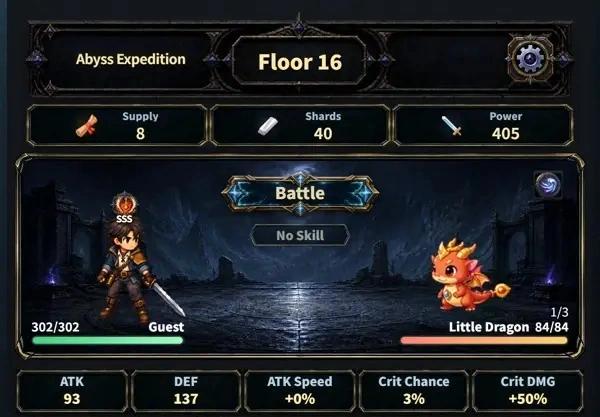
This is a UI-heavy 2D game. Much of its interaction happens in the loot board, equipment descriptions, reward choices and bag arrangement. HTML and CSS give those screens a familiar layout system, while JavaScript holds the game rules. Capacitor bundles the web assets into the Android and iOS applications. Native integrations handle services such as advertising and authentication. For this project, the practical benefit is a shared implementation of the decisions and interface. Changing a board rule in one place is easier to reason about than keeping separate Swift and Kotlin implementations of the same rule aligned. The choice was about the needs of this particular game, not a belief that every game should use a web stack. A general-purpose engine would bring useful rendering, animation and editor tools. Direct native development would bring its own platform tools and integration advantages. My priority here was to keep a menu-heavy game's state and presentation together while iterating across the mobile versions.What the shared code does not solve
A shared interface does not make Android and iOS behave identically. A rewarded advertisement can take the app away from the game. The player may return after a delay, or after the operating system has stopped the process. The reward, the saved state and the screen shown on return still need to agree. That boundary matters for the board decision too. The equipment already drawn, the remaining board and the player's resources must stay consistent while the player moves between screens or resumes the app. A finished-looking screen alone is not proof that the reward has been safely recorded. Browser tools are useful for inspecting layouts at different sizes and in different languages. Automated checks can exercise game rules and save recovery separately from the visual interface. Those checks complement native testing; they do not replace checking authentication, advertising callbacks and app suspension on each platform.The lesson I would pass on
Keep the game's central decision clear, and make the state behind that decision explicit. In this case, the player needs to understand both the reward for finishing the board and the option to replace it. A long list of bag, upgrade and fusion features is less useful than showing why someone might hesitate after already finding a good weapon. The release process needs the same clarity. Updating shared source files, preparing the bundled web assets, building a signed application and releasing it through a store are separate steps. Treating them separately helps avoid assuming that a local correction has already reached players. Abyss Expedition is available on Android and iPhone. It is free to download, with ads and optional in-app purchases.Play Abyss Expedition
- Screens and store links (opens in a new tab)
- Google Play (opens in a new tab)
- App Store (opens in a new tab)