How Cybercriminals Are Targeting Job Seekers

The platforms designed to connect talent with opportunity have become hunting grounds for sophisticated scammers. This guide breaks down how to protect yourself at every stage of your job search.
By Hirum KigothoTeam|Last updated: September 4, 2026|8 minutes read
cybersecurity
How Cybercriminals Are Targeting Job Seekers
As more companies recruit online and millions of professionals rely on remote work, freelance marketplaces, and job boards, attackers have found new ways to disguise scams as career opportunities. These scams can not only waste your time, but they can also lead to financial loss, steal your identity, or even compromise your entire digital life. As online recruitment continues to grow, so does the need for job seekers to stay vigilant. This guide will help you recognize the red flags, protect your personal information, and navigate your job search safely, without letting scammers derail your future.

Why job seekers are targets of cybercriminals

Job seekers are vulnerable because they are already expecting to receive communications from unfamiliar people and organizations. A recruiter contacting someone through LinkedIn, SEEK, or a freelance marketplace may therefore not immediately appear suspicious. A message offering a remote position, interview, contract, or freelance assignment fits naturally into the person's expectations. The same is true for freelancers. Professionals on platforms such as Upwork and Fiverr routinely communicate with strangers, receive project proposals, download documents, and exchange files with clients. This creates opportunities for attackers to hide malicious activity inside an otherwise normal business interaction. Employment-related information can be extremely valuable for cybercriminals. A resume may contain a person's full name, phone number, email address, employment history, education, professional qualifications, location, and other information that can be used for identity theft or additional social-engineering attacks.

How Cybercriminals target job seekers

1. Fake job advertisements

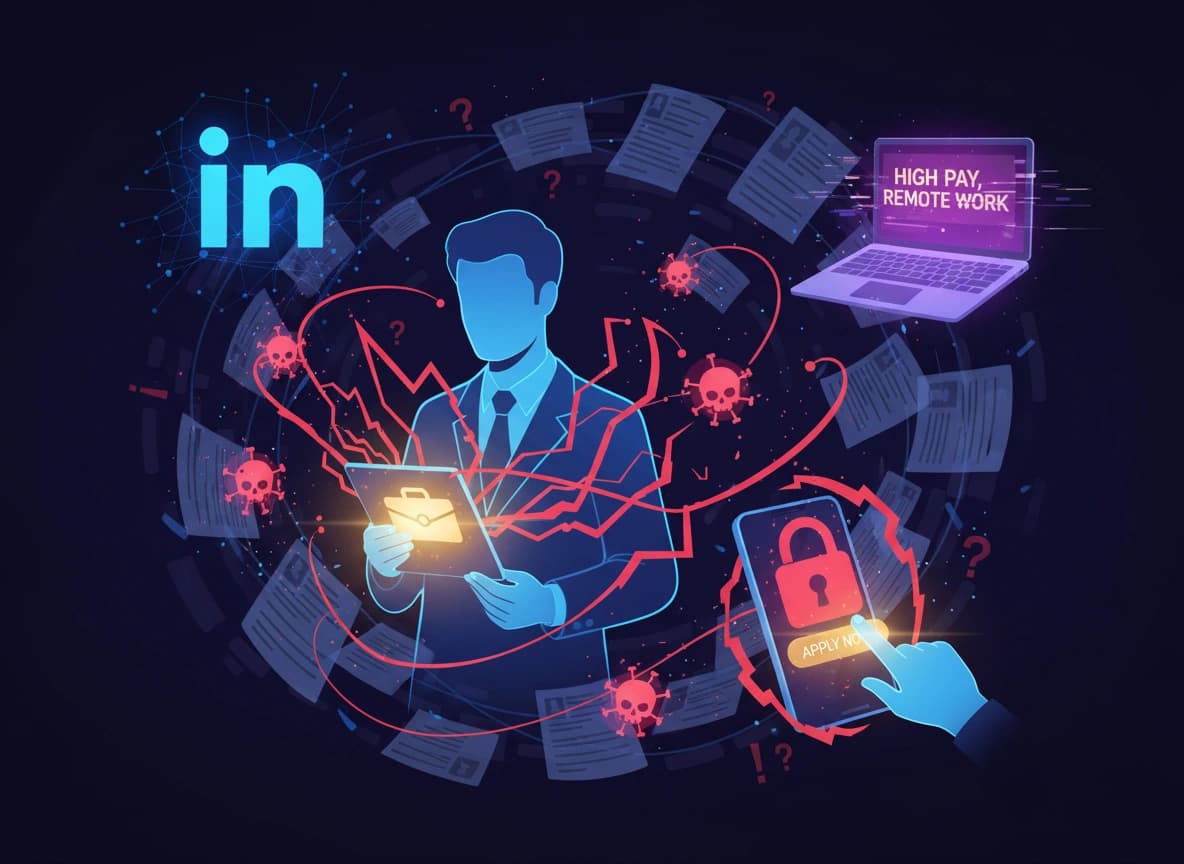
One of the simplest techniques is the fake job posting. Criminals create advertisements for positions that appear real but do not actually exist. The advertisements may promise unusually high salaries, remote work, flexible schedules, minimal qualifications, or immediate hiring. The objective varies. Some scammers simply attempt to steal money from applicants. Others collect personal information or direct victims to phishing websites. Freelance marketplaces are also affected. Upwork warns that common scams include unrealistic offers, vague job descriptions, requests to communicate outside the platform, phishing messages, and demands for money or gift cards. AI has made the creation of these fake advertisements easier. Attackers can generate polished descriptions tailored to specific professions.

2. LinkedIn

LinkedIn is a valuable platform for networking, sharing insights, and discovering career opportunities, but its visibility can also make users attractive targets for cybercriminals. Attackers create LinkedIn profiles using stolen photographs, copied employment histories, or AI-generated profile information. They can then approach professionals directly with supposedly attractive opportunities. Even seemingly casual conversations can be used to gather sensitive information about individuals or organizations. To reduce the risk, regularly review your LinkedIn privacy settings, avoid publicly sharing sensitive recruitment or workplace details, and be cautious when accepting connection requests from unfamiliar accounts. Check details such as the person's job title, email address, location, follower count, and how long the account has been active. If you don't know or trust someone, consider declining their connection request.

3. Malicious interview documents and coding tests

Perhaps one of the most dangerous developments is the use of malware disguised as part of the hiring process. A candidate may receive a document described as an interview assignment, job description, technical test, company presentation, contract, or application form. Instead, the file may contain malicious code or direct the victim to a website designed to compromise their computer. North Korean-linked threat actors have repeatedly used this approach to target software developers on LinkedIn through a sophisticated social engineering campaign. The approach involves establishing a fabricated online persona with a credible professional background, which is used to build a rapport with a developer over an extended period. After gaining the target's trust, the attacker will usually steer the conversation toward a lucrative job opportunity or a coding project, eventually asking the developer to download and run a "test" file or a coding challenge. This file is usually malware. Once executed, the malware can compromise the developer's system, allowing the attackers to steal credentials or gain a foothold into the developer's corporate network for further espionage.

4. Building Trust Before Making Their Move

The most sophisticated social engineering attacks don't necessarily look suspicious at the beginning. An attacker may spend considerable time communicating with the target. They can discuss the victim's experience, ask about career goals, explain the company's supposed culture, and answer questions about the position. They may even conduct multiple rounds of interviews. This gradual approach exploits an important psychological principle: people tend to become more comfortable with requests after establishing familiarity with the person making them. Once that relationship has been established, a malicious request can appear to be simply another step in the hiring process.

How job seekers can protect themselves

Research the employer independently. Do not rely solely on the contact information supplied by the recruiter. Search for the company through independent sources. Check whether the company's website, email domain, physical address, employee profiles, and job advertisements are consistent. Verify recruiters. Check whether the person's employment history is consistent, whether the profile appears recently created, and whether the recruiter can be independently verified through the organization's official channels. Never open or download unsolicited files, especially PDFs and Word documents, until you have verified the sender. Use a dedicated email for job search To minimize your exposure during a job search, it's wise to use a dedicated, separate email address exclusively for applications and outreach. This can help you organize and track which companies, platforms, or individuals have access to your contact information, and also protects your primary personal or work email. Do not pay. Requests for deposits, cryptocurrency payments, gift cards, or transfers are major warning signs. Do not pay for training, equipment, or background checks. Apply through official channels Stick to secure application channels by submitting your applications directly through official company career pages or well-established, trusted recruitment platforms. Slow down Social engineering depends heavily on urgency and emotional pressure. Taking time to independently verify an opportunity can break the attacker's momentum. Alert others If you encounter these kinds of scams, let your friends and family know about the scam so they can avoid falling for it too.

Companies Also Have a Role to Play

The responsibility shouldn't fall entirely on job seekers. Organizations should recognize that attackers can impersonate their recruiters and hiring managers to target candidates. Companies can help by clearly communicating how their recruitment works. Companies should also monitor for fraudulent job advertisements and impersonating recruitment accounts, particularly when their brand is being used to target large numbers of candidates.

Conclusion

Job seekers are becoming targets because the hiring process naturally requires people to communicate with strangers, exchange documents, share professional information, and trust unfamiliar organizations. As remote employment and freelance work continue to expand, the job search itself is becoming another major vector in the fight against cybercrime.

Share this article

Frequently asked questions

Newsletter

Stay in the Loop.

Subscribe to our newsletter to receive the latest news, updates, and special offers directly in your inbox. Don't miss out!