Short answer
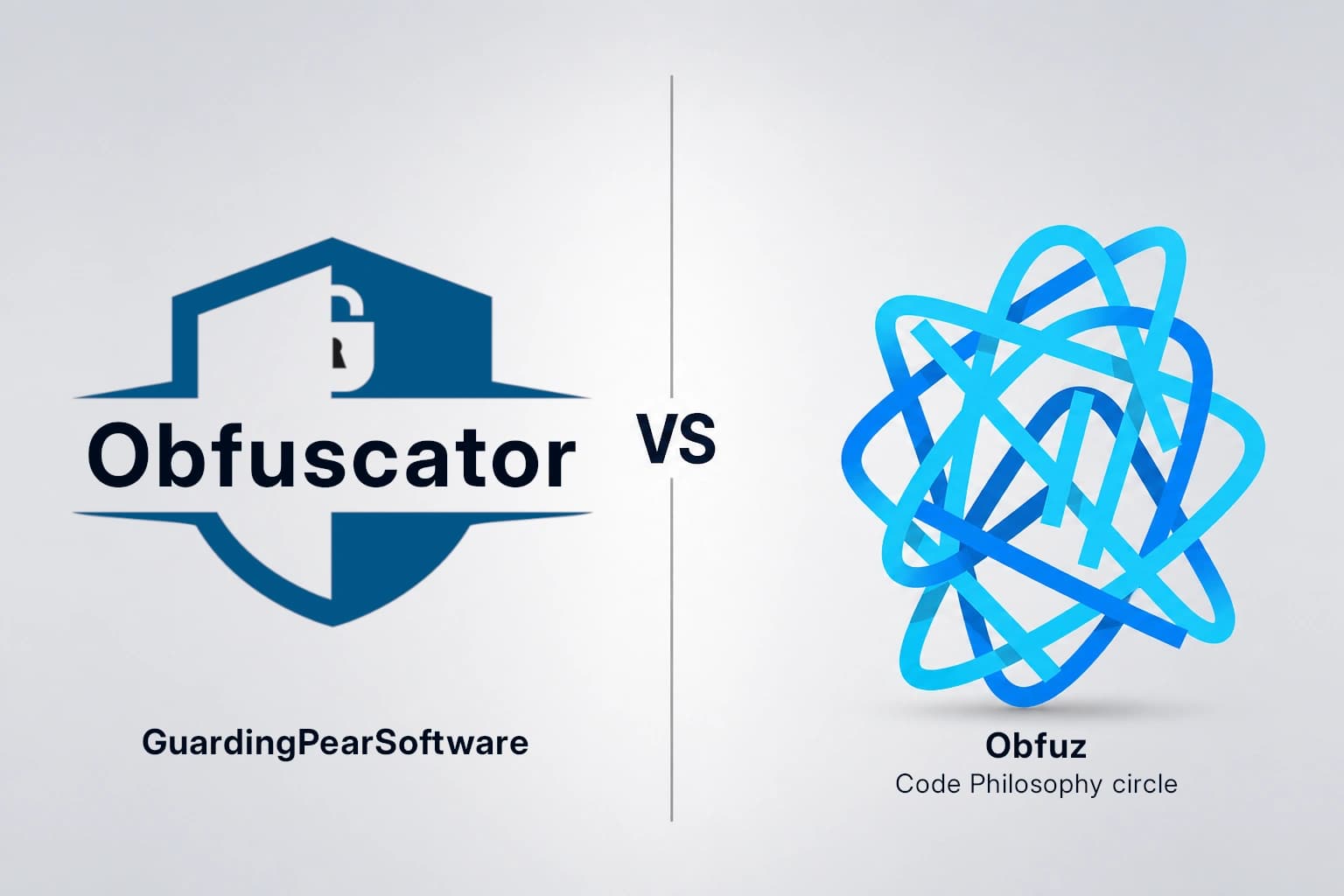
GuardingPearSoftware Obfuscator Pro costs $79.99 (one-time purchase). It includes symbol renaming, string obfuscation, fake code injection, method control flow, watermarks, and anti-tamper checks. It runs directly inside your Unity build pipeline and patches your game assets when it renamesMonoBehaviour classes and other serialized types.
Obfuz is a free MIT plugin. HybridCLR docs point to it when hot-update code needs protection. The public list is long: symbols, constants, strings, control flow, call and expression obfuscation, a random encryption VM, polymorphic DLLs and watermarks. It is made to work with little config, but it does not rename MonoBehaviour type names. That is a Unity-safe default, and wanted.
In simple words:
- Choose GuardingPearSoftware Obfuscator if you want plug and play, Unity type renaming with asset updates, and a publisher behind the asset.
- Choose Obfuz if you need HybridCLR or xLua hot update, you want the source for free, and you are fine configuring a code-first plugin.
Quick comparison
| Topic | GuardingPearSoftware Obfuscator | Obfuz |
|---|---|---|
| Vendor | GuardingPearSoftware | Open-Source |
| Based in | Germany | China |
| License | Paid Asset Store seat (Free tier exists) | MIT, free |
| Price | $79.99 Pro | $0 |
| Setup | Plug and play | Plug and play |
| MonoBehaviour class names | Renames and patches assets | Not supported |
| Hot update | General Unity builds | First-class HybridCLR and xLua |
| DOTS | Yes | Yes |
| Addressables | Yes | No |
| Control flow | Yes | Yes |
| Encryption VM | Not supported | Supported |
| Watermarks | Yes | Yes |
| Support | Phone, Email, Discord | GitHub, Discord, QQ, Email |
| Best fit | From Indie to Enterprise Studio | Teams that already use HybridCLR or want OSS |
What GuardingPearSoftware Obfuscator does
GuardingPearSoftware Obfuscator is a Unity cybersecurity asset. After you enable it, protection runs when you press Build. You do not export a DLL, open a second Windows GUI, then copy files back. The same hooks fire for a customBuildPipeline.BuildPlayer script and for cloud builders that run a normal Unity player build.
The package can rename namespaces, classes, methods, fields, properties, and events. And also rename the Unity types that most tools skip: MonoBehaviour, ScriptableObject, and Playable classes. After the rename pass, it updates scenes, prefabs, and other assets that still store those names.
Unity stores a lot of meaning as text. A button in the Inspector may keep the method name it should call. An animation event may keep a string. A serialized field on a component keeps its field name. Addressable bundles can keep script references too. Obfuscator has compatibility settings for those cases: Inspector values, UnityEvents, animation events, reflection and coroutines, UI Toolkit, and Addressables.
It also hides strings, adds random fake code, and can suppress simple ILDasm inspection. Mono builds can get control flow and assembly signing. Standalone builds can get integrity checks. Watermarks are included to proof ownership. Mapping files stay available so crash logs are still readable after release. A Free tier exists if you want to test the pipeline first. MonoBehaviour and namespace renaming are Obfuscator Pro features.
The tool stays local. You do not send the game to a cloud protector. Because it runs inside Unity and Tuanjie, it works on any platform where those editors run, including Windows, macOS, and Linux build machines.
What Obfuz does
Obfuz is a Unity package, not a generic .NET GUI. HybridCLR's own docs say that among current open-source tools, only Obfuz is deeply tied to Unity and fully supports HybridCLR. You install the package, mark assemblies, and generate secret key and VM files. That is simple for programmers. It is not the same as a one-click Asset Store product. HybridCLR workflows also need theobfuz4hybridclr extension, because the default HybridCLR generate steps do not expect obfuscated names.
Its public feature list is long:
- Symbol obfuscation with rules and incremental builds
- Constant, string, and array obfuscation
- Evaluation-stack, expression, and call obfuscation
- Control-flow flattening
- A randomized encryption virtual machine
- Static and dynamic decryption
- Polymorphic / structurally random DLLs
- Garbage code
- Code watermarks
- Unity 2019+, Tuanjie, Mono, and IL2CPP
MonoBehaviour type names because Unity looks those types up when it loads scenes and prefabs. It still obfuscates the code inside the class. That is a safe default. It also leaves the type name attackers search for first.
The biggest difference
Obfuz competes on hardening techniques and hot-update support. GuardingPearSoftware Obfuscator competes on Unity product workflow and type-level renaming. If your live game loads HybridCLR DLLs after install, those DLLs are as readable as a Mono build. That is why Obfuz exists, and why HybridCLR recommends it. If your game is a normal Unity player build (mobile, console, standalone) and you care about prefab-safe renaming plus a support channel, GuardingPearSoftware Obfuscator is the shorter path. A virtualized or encrypted method is hard to read. A class that still saysPlayerHealth on the prefab is still easy to find. GuardingPearSoftware Obfuscator attacks that second problem by renaming the type and updating the asset. Obfuz attacks the first problem and leaves the type name stable.
You can invent a two-layer pipeline. You also get two ways to break the build. Start with one tool. Add a second layer only if you have a clear extra threat, such as hot-update DLLs plus a store build.
Why Unity-aware renaming matters
Unity does not only compile C#. It also saves type names and member names inside assets. That is how the Inspector, scenes, and prefabs keep working after you close the Editor.If a generic protector renamespublic class PlayerHealth : MonoBehaviour { [SerializeField] private int maxHealth = 100; public void TakeDamage(int amount) { maxHealth -= amount; } }
PlayerHealth or maxHealth, the prefab can lose the script or reset the value. If it leaves those names alone so the prefab stays valid, attackers still search for PlayerHealth and find the class.
Obfuz chooses the second path for type names and still hides the method body. GuardingPearSoftware Obfuscator is built for the first path. It can rename the class and the serialized field, then update the related assets so the GameObject still points at the new names.
Both answers are Unity-aware. They solve different parts of the same tradeoff.
Which one should you pick?
Pick GuardingPearSoftware Obfuscator if you want:- An Asset Store product with an enterprise vendor behind it
MonoBehaviourandScriptableObjectrenaming with asset updates- Less time writing obfuscation rules
- Regular updates
- A normal player build, not a HybridCLR-first game
- Zero license cost
- HybridCLR or xLua as a first-class target
- A wide OSS protection set, including an encryption VM
- Full source under MIT from day one