The origins of RSA: From academic theory to industry standard
The story starts in 1977 at MIT. Three researchers, Ron Rivest, Adi Shamir, and Leonard Adleman, published a breakthrough cryptographic method that solved a major problem in computer security: how to exchange secrets over an insecure network. Their solution became known as the RSA cryptosystem, named after the initials of the three inventors. In 1982, they founded RSA Security to commercialize the technology. Over the following decades the company built encryption libraries and authentication technologies used across the internet. RSA technology eventually ended up everywhere:- web browsers
- routers
- enterprise software
- financial systems
- gaming platforms
What RSA actually is: A quick technical explanation
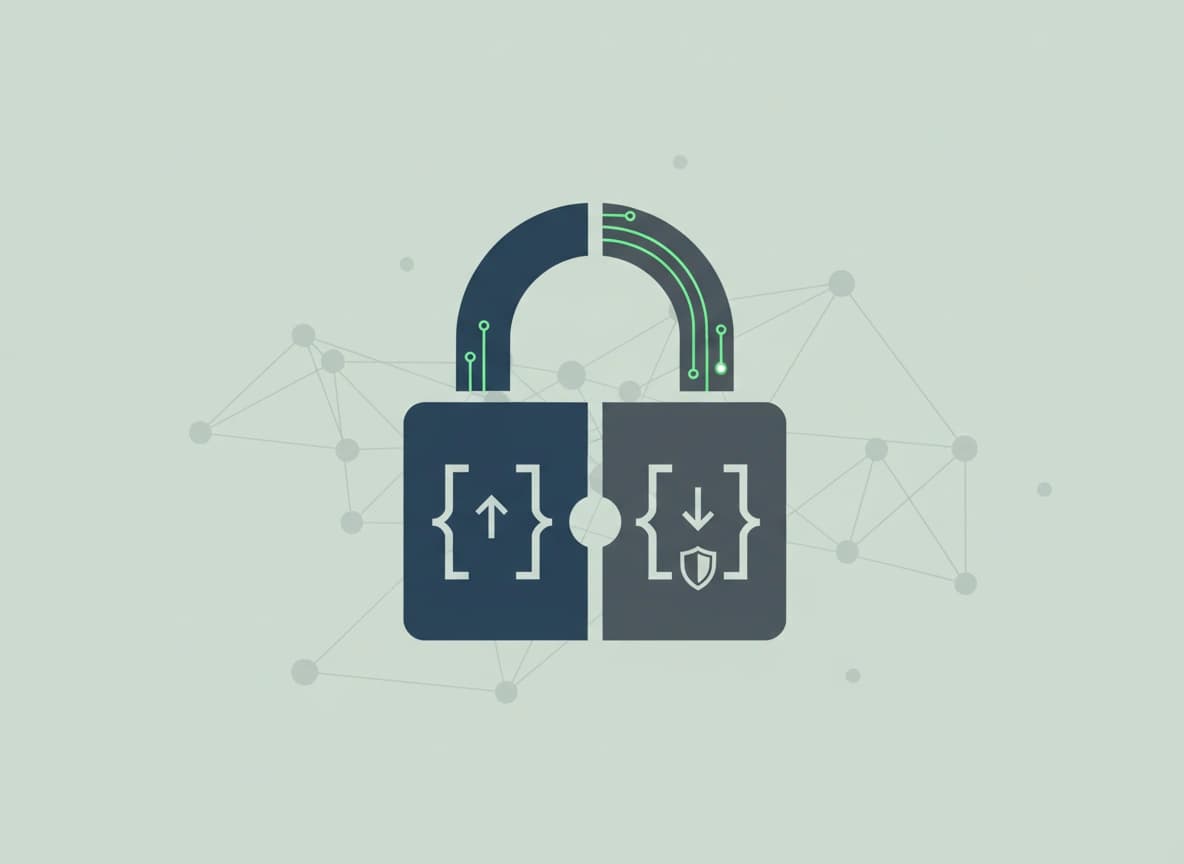
At its core, RSA is a public-key cryptography system. Instead of using one shared secret key, RSA uses two keys:- public key → used for encryption
- private key → used for decryption
- A user publishes their public key.
- Another system encrypts data with that public key.
- Only the owner of the private key can decrypt it.
- encryption
- digital signatures
- certificate validation
- secure random number generation
The cybersecurity landscape around 2009
Around 2009 the internet was changing fast. Cloud computing was starting to grow. Virtualization was becoming common. Web services were replacing monolithic software systems. At the same time, cyber attacks were increasing dramatically. Malware, botnets, and credential theft were becoming everyday threats. During the RSA Conference in 2009, RSA executives described the situation as a “pandemic increase” in cyber attacks. The problem was not only the attacks themselves. It was the architecture of software. For many companies security was still something that was added later:- Build the application
- Launch it
- Patch security holes afterwards
The RSA share project: Opening enterprise cryptography to developers
This is where the RSA Share Project came in. In 2009, RSA Security announced that parts of its BSAFE cryptographic toolkit would be made available for free to developers. Instead of selling the library exclusively to enterprise customers, the company released a “Share” version of the toolkit. Developers could download SDKs and integrate strong encryption directly into their applications. The project focused on a few core ideas:- make enterprise cryptography accessible
- encourage security-first architecture
- build a developer community around security tools
The bsafe toolkit and the sdk architecture
The RSA Share Project distributed the BSAFE Share SDK in two main development environments:- C / C++
- Java
The $10,000 developer challenge
To encourage experimentation, RSA launched a developer competition. The challenge was simple: build a creative web application using the BSAFE Share toolkit. The prize? $10,000 for the most interesting and practical implementation. This might sound small by today’s startup standards, but the real goal wasn’t the prize money. It was about attracting developers into the ecosystem and discovering new ways encryption could be used in modern applications.Why the RSA share project mattered for developers
The RSA Share Project represented a philosophical shift. Traditionally, high-grade security tools were:- expensive
- licensed
- restricted to enterprise customers
How game developers and studios could use RSA
Game developers might not immediately think about cryptography, but modern games depend heavily on secure systems. Here are a few ways RSA-style encryption can be useful.Secure player authentication
Online games need secure login systems. RSA can help protect:- password exchange
- authentication tokens
- session keys
Protecting in-game economies
Games with trading systems or digital currencies must prevent manipulation. Cryptographic signatures can help verify:- transactions
- marketplace activity
- item ownership
Anti-Cheat and client verification
Many cheats involve modifying client data. Digital signatures can help verify that:- the game client is legitimate
- updates are authentic
- files are not modified
Secure server communication
Multiplayer games constantly exchange data between client and server. Encryption ensures that:- data packets cannot be intercepted
- player actions cannot be spoofed
- session data remains private
Protecting game assets
Studios may also want to protect intellectual property:- game updates
- downloadable content
- server binaries
Challenges and controversies around rsa and bsafe
Not everything in the RSA story is positive. Years after the Share Project launched, researchers discovered that a pseudorandom number generator used in BSAFE called Dual_EC_DRBG might contain a backdoor. This algorithm had been standardized by National Institute of Standards and Technology but was later suspected of being influenced by the National Security Agency. The controversy damaged the reputation of RSA Security and sparked widespread debate about trust in cryptographic standards. It also reinforced an important lesson for developers: cryptography must always be transparent and peer-reviewed.The long-term legacy of the rsa share project
Even though the Share Project itself was a short-lived initiative, its philosophy had lasting impact. The idea that security should be built into software from the start is now standard practice. Modern developers rely on:- open cryptographic libraries
- community security tools
- built-in platform security features
Lessons for modern developers and studios
For developers today, the biggest lessons are still relevant. 1. security should be architecture, not a feature If you add security later, you already lost. 2. use trusted cryptographic libraries Never implement your own encryption unless you are a cryptographer. 3. design for hostile environments Assume attackers can inspect clients, intercept traffic, and modify data. 4. build secure ecosystems Security is not just about algorithms. It’s about how systems interact.Conclusion: Democratizing security foundations
The RSA Share Project was an early attempt to democratize cryptographic infrastructure. By making enterprise encryption tools accessible to developers, RSA Security encouraged a generation of engineers to think about security earlier in the development process. For game developers and software engineers alike, the message still holds: the most secure systems are not the ones with the most patches, but the ones designed with security at their core. Cryptography is not just a security feature. It is part of the foundation of modern software. And the earlier you start using it, the better your systems will be.More to read
- RSA Official Website (opens in a new tab)
- RSA Cryptosystem Overview (opens in a new tab)
- RSA Makes BSAFE Encryption Toolkits Available at No Cost (opens in a new tab)
- 2009 Saw a “Pandemic Increase” in Hack Attacks (opens in a new tab)
- Cloud Security a Key Focus at RSA Conference (opens in a new tab)
- RSA Conference Overview and Guide (opens in a new tab)
- NIST Guidance on RSA Key Establishment (SP 800-56B) (opens in a new tab)
- The RSA Algorithm Explained – Bruce Schneier (opens in a new tab)
- Twenty Years of Attacks on the RSA Cryptosystem (Stanford Cryptography Research) (opens in a new tab)