The Rise of “DDoS-for-Hire” and What It Means for Small Businesses

For the price of a coffee, anyone can now rent a cyber weapon powerful enough to knock your website or your online store offline.
By Hirum |Last updated: January 13, 2026|9 minutes read
cybersecurityiot security
The Rise of “DDoS-for-Hire” and What It Means for Small Businesses
Distributed Denial of Service (DDoS) attacks have long been a threat to large enterprises and government networks. But over the past decade, and especially in recent years, a disturbing trend has emerged: the commoditization of DDoS attacks through so-called DDoS-for-hire services. These services, often advertised as booters or stressers, allow virtually anyone to launch powerful attacks at low cost and with minimal technical skill.

What Is DDoS-for-Hire?

A DDoS attack overwhelms a website or network with traffic from many sources, making it slow or entirely unavailable to legitimate users. DDoS for hire services sell access to botnets, which are networks of malware-infected machines that are effectively being “subleased” to paying customers. Traditionally, mounting a DDoS attack required technical know-how and access to large botnets, networks of compromised devices. However, DDoS-for-hire services package that capability into a “cybercrime-as-a-service” model. For a small fee (sometimes as little as a few dollars), an individual can rent access to a botnet and conduct an attack. Although some services market themselves as tools for network stress testing, they typically do not verify that the customer actually owns or controls the target, meaning anyone can pay to knock another site offline.

Why DDoS-for-Hire Services Have Proliferated

Several converging factors have fueled the rapid growth of DDoS-for-hire services, transforming denial-of-service attacks into a scalable, on-demand criminal business model.

Low Cost and Ease of Use

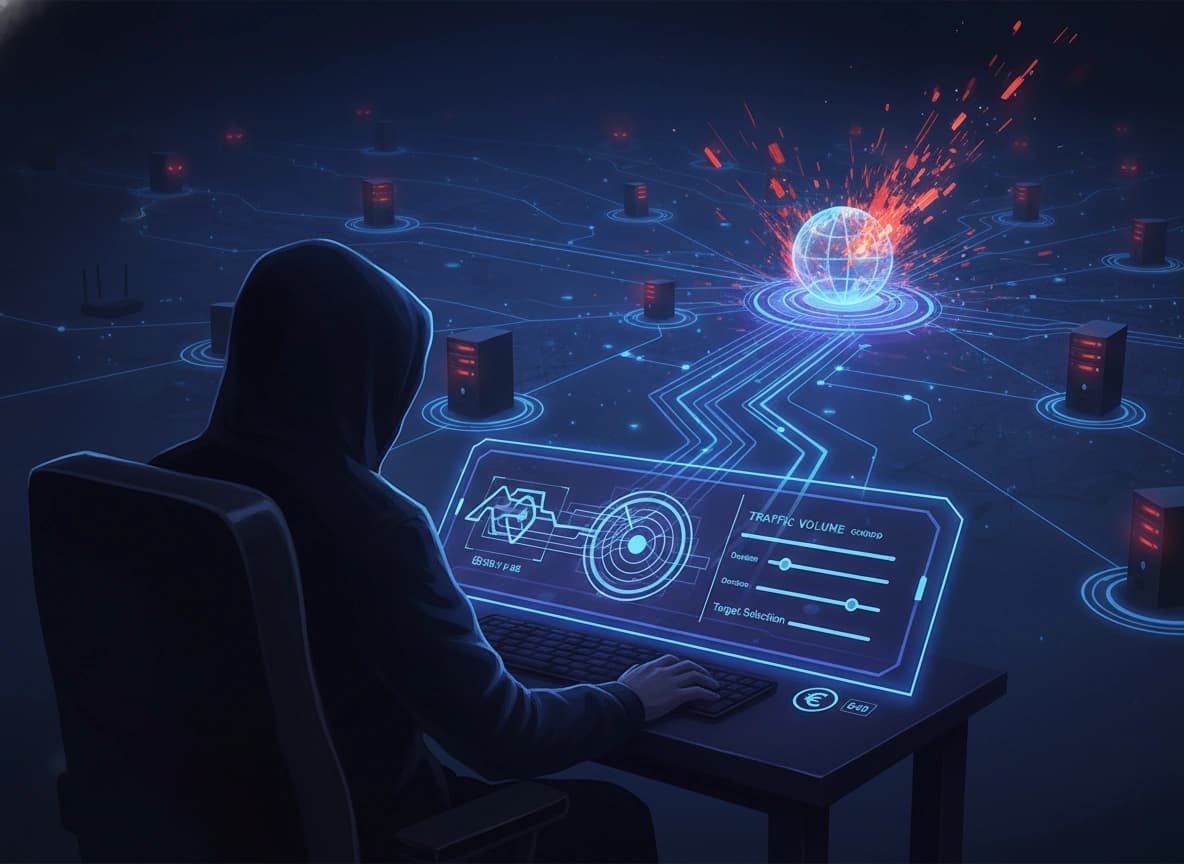
DDoS-for-hire platforms are designed to remove technical barriers entirely. Modern booter dashboards resemble legitimate SaaS products, complete with login portals, target input forms, attack duration sliders, and payment pages. Users no longer need to understand networking, botnets, or traffic amplification techniques. With just a few clicks, and often for less than the cost of a streaming subscription, anyone can initiate an attack capable of disrupting websites, APIs, or online services. This accessibility has expanded the pool of potential attackers, including teenagers, disgruntled individuals, and opportunistic competitors.

Broad Availability and Marketing

Unlike traditional cybercrime tools hidden deep within the dark web, many DDoS-for-hire services operate in plain sight. They are promoted on public forums, encrypted messaging apps, gaming communities, and mainstream social platforms. Some providers even offer free trials, referral programs, and customer support channels. This open marketing approach lowers the psychological and technical threshold for abuse, making DDoS attacks feel less like serious cybercrime and more like a purchasable nuisance service.

Expanding Botnets Fueled by IoT Insecurity

The explosion of internet-connected devices has created an enormous attack surface. Poorly secured IoT products, such as home routers, network-attached storage, IP cameras, and smart appliances, are frequently deployed with weak credentials and rarely updated. Once compromised, these devices can be quietly absorbed into botnets capable of generating massive volumes of traffic. As millions of new devices come online each year, attackers gain access to a continuously replenished pool of traffic sources, enabling larger and more persistent attacks at minimal cost.

Resilience and Adaptability of the Underground Market

Law enforcement agencies and international coalitions have successfully dismantled many high-profile DDoS-for-hire platforms. However, the ecosystem has proven highly resilient. When one service is taken down, others quickly emerge, often reusing the same infrastructure, codebases, or operators under new names. Some providers migrate between jurisdictions, rotate domains frequently, or decentralize operations to evade disruption. This rapid regeneration mirrors other cybercrime-as-a-service markets, making sustained suppression extremely difficult.

Cryptocurrency and Anonymous Payments

The widespread use of cryptocurrencies has further accelerated the growth of DDoS-for-hire services. Anonymous or pseudo-anonymous payment methods reduce the risk for both operators and customers, making transactions harder to trace. This financial opacity enables attackers to act with greater confidence and lowers the perceived consequences of launching attacks.

Why Small Businesses Should Be Concerned

Historically, small businesses were less likely to be targeted by DDoS attacks because attackers focused on high-value corporate or government infrastructure. That is no longer the case.

1. Small Businesses Are Attractive Because Attacks Are Cheap

Launching an attack via an online service often costs less than buying a few cups of coffee. This means anyone, from disgruntled competitors to pranksters, can afford to orchestrate an attack.

2. Damage Isn’t Just About Downtime

For a small online retailer or service provider, even a brief outage can have outsized consequences. Every minute a checkout page or booking system is offline translates directly into lost revenue and missed conversions, while customers experiencing failed transactions or unavailable services may lose trust in the brand altogether. Beyond customer-facing impact, DDoS disruptions can also cripple internal operations, cutting off access to cloud-based tools, inventory systems, and internal communications, and compounding the financial and reputational damage long after the attack ends.

3. Businesses Depend More on Digital Services Than Ever

Small business digital transformation from e-commerce and remote working tools to cloud-based customer portals means that availability now directly ties to competitiveness. According to recent analysis, attackers are increasingly using sophisticated tactics like short bursts and application-layer floods that resemble legitimate traffic, making them difficult to detect without specialized defenses.

Common Motives Behind DDoS Attacks on Small Enterprises

Understanding why DDoS attacks occur is critical to preventing them and responding effectively when they happen. Unlike large enterprises, small businesses are often targeted for opportunistic or personal reasons rather than strategic gain, making attacks harder to predict.

1. Extortion and Ransom DDoS (RDoS)

In some cases, attackers deliberately disrupt a business’s online presence and then demand payment to stop the attack. These ransom demands are often modest compared to the damage caused, pressuring small businesses with limited downtime tolerance to pay quickly. Even when payments are made, there is no guarantee the attacks will stop, and victims may be targeted again.

2. Sabotage and Unfair Competition

Small enterprises can fall victim to malicious competitors seeking to disrupt operations during critical business periods such as product launches, sales events, or peak seasons. Because DDoS-for-hire services are inexpensive and anonymous, rivals may see them as a low-risk way to gain a competitive edge by temporarily knocking a business offline.

3. Hacktivism and Personal Vendettas

Ideological disagreements, political views, or personal conflicts can motivate attackers to launch DDoS attacks as a form of protest or retaliation. Small businesses with a public online presence, outspoken leadership, or visible community engagement may be targeted simply for taking a stance that angers a particular group or individual.

4. Opportunistic Misuse and Experimentation

The ease of access to DDoS-for-hire platforms has also led to attacks driven by curiosity or boredom rather than intent to profit. Some attackers use small business websites as “test targets” to experiment with attack tools, generate bragging rights in online forums, or simply cause disruption because the barriers to entry are so low.

5. Smokescreens for Other Attacks

In some cases, DDoS attacks are used to distract IT teams while attackers attempt other malicious activities, such as credential stuffing, data theft, or fraud. Small businesses with limited security monitoring are particularly vulnerable to this dual-purpose tactic.

What Small Businesses Can Do

Although DDoS threats are real and growing, they’re not inevitable. Here are practical steps small businesses can take:

1. Invest in a DDoS Protection Service

Cloud-based DDoS mitigation, often available through CDN providers or security platforms, can absorb and filter malicious traffic before it hits your origin server.

2. Use Rate Limiting and Application Filtering

These measures make it harder for bots to overwhelm specific business functions like login pages or payment portals.

3. Work With Your Hosting Provider

Many modern hosting providers offer built-in protections or can recommend external services to bolster defenses.

4. Develop an Incident Response Plan

Being prepared, with backups, communication plans, and mitigation steps, reduces downtime and customer impact.

Conclusion

The rise of DDoS-for-hire has changed cybersecurity, turning once-complex attacks into on-demand services that anyone can buy. This shift disproportionately impacts small businesses because attackers need little motivation, cost, or technical expertise to launch an attack, but the victims suffer significant financial and reputational consequences. By understanding the threat and taking proactive steps, small businesses can build resilience and continue serving customers.
Newsletter

Stay in the Loop.

Subscribe to our newsletter to receive the latest news, updates, and special offers directly in your inbox. Don't miss out!