What is OpenClaw? Understanding the autonomous agent ecosystem
OpenClaw is an open source, local first ai agent framework designed to act like a persistent teammate. Instead of waiting for instructions, it can run continuously in the background, monitor systems, and trigger actions on its own. Think of it as a developer bot that never sleeps. At a technical level, OpenClaw runs as a node.js process and connects to tools like git, messaging apps, and even game engines. It stores memory in markdown files like soul.md and memory.md, giving it a kind of long term personality and context. For game developers, this can mean:- automatically running builds when code changes
- analyzing logs and surfacing bugs
- triggering playtests or simulations
- managing assets or pipelines
What is Claude Code? The foundation of structured agentic development
Claude Code, developed by Anthropic, takes a different approach. It is a command line interface tool that turns an ai model into an active coding partner inside your terminal. Unlike traditional copilots, Claude Code can:- read and understand your entire codebase
- edit files directly
- run shell commands
- manage git workflows
- execute multi step tasks autonomously
Claude Code Game Studios: The idea of a virtual game studio
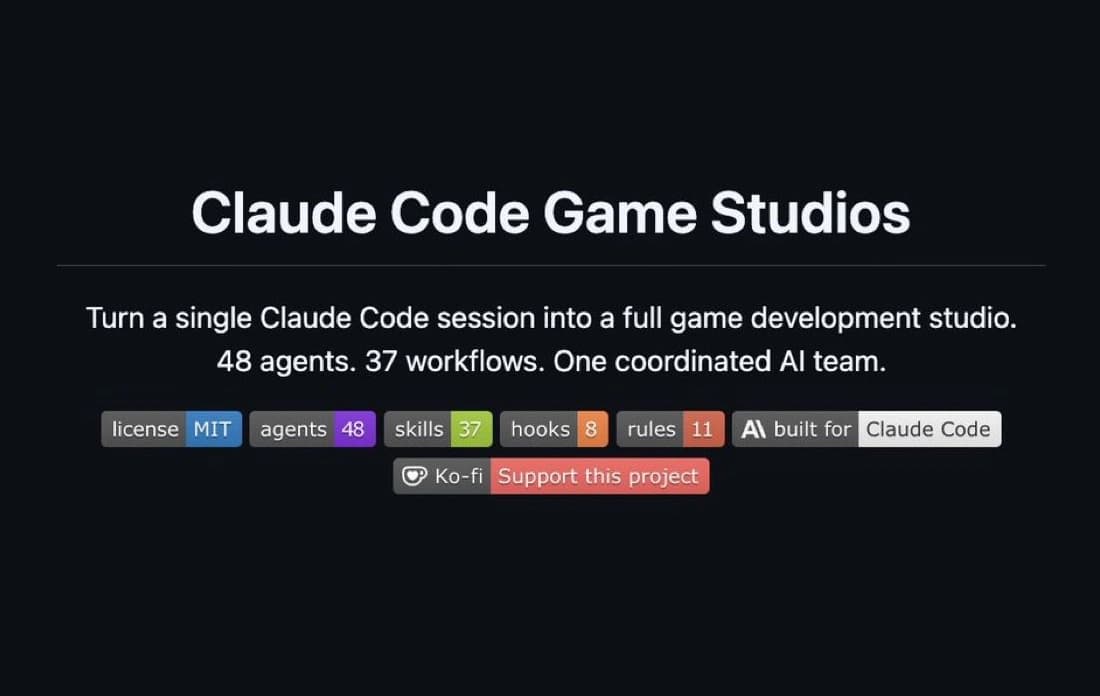
Claude Code Game Studios (opens in a new tab) (or short CCGS) is the new rising start at github. It is not just a tool. It is a meta framework built on top of Claude Code. Its core idea is simple but powerful: What if a solo developer could operate like a full game studio? Instead of one general purpose ai agent, CCGS introduces a structured hierarchy of specialized agents. These agents mimic real roles in a game studio, from creative direction to gameplay programming. The goal is to bring discipline, consistency, and scalability to ai assisted development. In practice, CCGS turns your terminal into a studio environment where:- Decisions are reviewed before implementation
- Systems are designed before coded
- Responsibilities are clearly separated
How Claude Code Game Studios works under the hood
Technically, Claude Code Game Studios is a layered system built around three main concepts: 1. Agent hierarchy The framework defines a multi tier structure:- directors for strategy and vision
- leads for domain ownership like design or programming
- specialists for implementation work
- /brainstorm
- /design systems
- /sprint plan
- /code review
- automated hooks such as before commits or session changes
- path based permissions for editing
- document templates like gdd and adr
Workflows and agents: Building games with a structured ai team
One of the most interesting parts of CCGS is how it models actual game development workflows. A typical flow might look like this:- Brainstorming You define the core idea with /brainstorm. The system helps shape mechanics, player motivations, and high level concepts.
- System design With /design systems, the game is broken into components like combat, inventory, or progression.
- Documentation Each system gets a proper design document before coding starts.
- Prototyping A quick, rough version is built to validate ideas.
- Implementation Specialists handle the actual coding, guided by leads.
- Review and iteration Code reviews and design reviews ensure quality.
Practical use cases for game developers and designers
So how can this actually help in day to day work? For programmers- enforce clean architecture and coding standards
- automate testing and code reviews
- manage complex systems like ai, networking, or physics
- generate and validate mechanics using structured frameworks
- balance systems with dedicated economy or systems agents
- maintain consistency across large projects
- simulate a full team without hiring
- reduce context switching between roles
- keep long projects organized
- accelerate pre production
- standardize workflows
- reduce technical debt early
Claude Code Game Studios vs OpenClaw: Two different philosophies
At a high level, both systems aim to extend what developers can do with ai. But they take opposite approaches. OpenClaw- autonomous and always running
- highly flexible and extensible
- requires strong technical setup
- higher risk with security and stability
- session based and collaborative
- structured and role driven
- easier to reason about
- focused on engineering discipline
- OpenClaw is like hiring a hyperactive generalist
- CCGS is like managing a well organized studio
What this means for the future of game development
The bigger picture is not about tools, but about roles. We are moving from:- writing code to orchestrating systems
- implementing features to supervising agents
- being a developer to being a studio director
- design systems
- coordinate ai agents
- review outputs
- ship full scale games