7 Cybersecurity Habits You Should Adopt in 2026

This guide walks you through seven essential habits that will actually protect your digital life today.
By Hirum Kigotho|Last updated: April 28, 2026|7 minutes read
cybersecurity
7 Cybersecurity Habits You Should Adopt in 2026
Cybersecurity threats are evolving faster than most people can keep up with. The strategies that worked last year may already be outdated, and cybercriminals are well aware of that. Here are the cybersecurity practices that truly matter in 2026, shaped by today’s threat landscape, real-world incidents, and what security professionals are actively seeing on the ground.

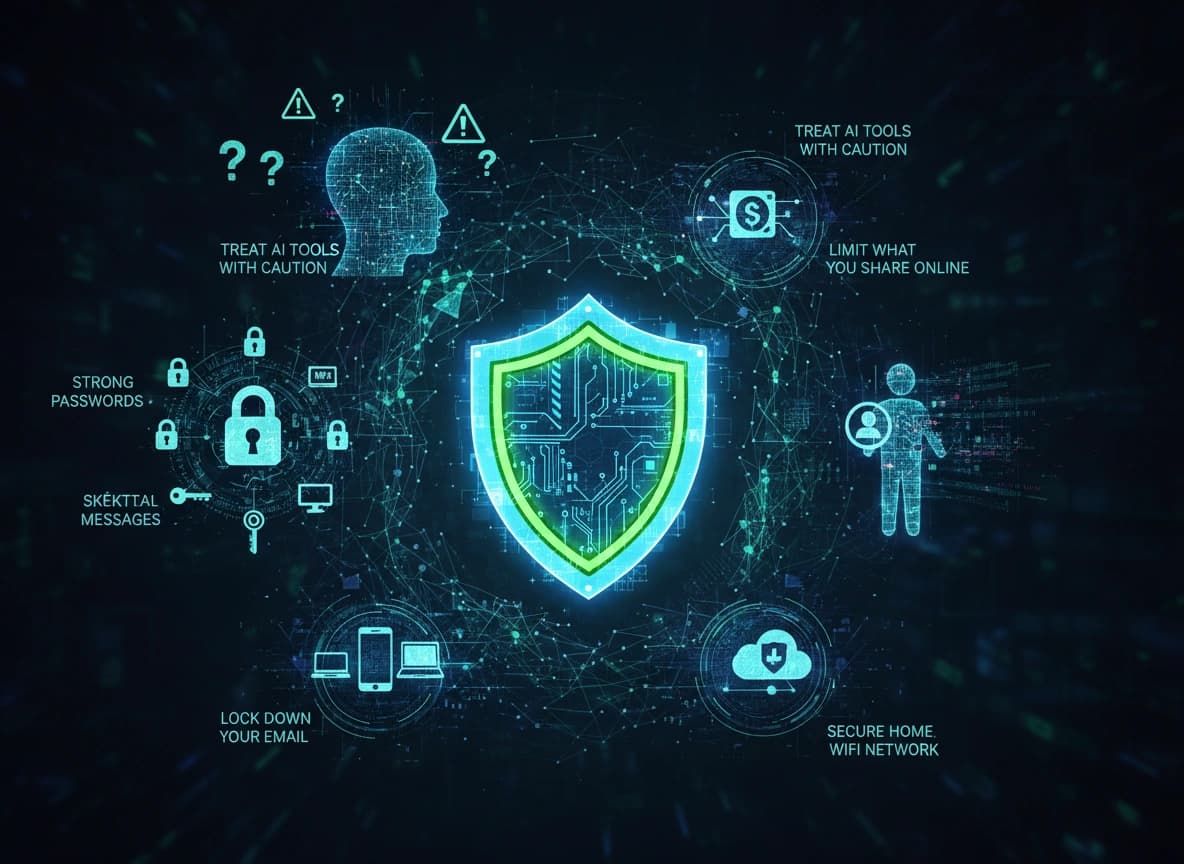
1. Use Strong, Unique Passwords (and Stop Reusing Them)

Reusing the same password across multiple accounts remains one of the most common security mistakes people make. When a data breach happens, attackers often gain access to email addresses and passwords. From there, attackers use a technique called credential stuffing, where they automatically test those stolen login details across other platforms such as banking apps, social media, cloud storage, and more. Today, this process is heavily powered by AI and automation. AI tools can rapidly simulate login attempts at scale, adapt to different website login systems, bypass basic protections, and even prioritize high-value accounts. The safer approach is to use long, unique passphrases for every account. To make this practical, use a password manager. These tools can generate strong, unique passwords for every account and store them securely, so you don’t have to remember them all. This removes the temptation to reuse passwords and significantly reduces your exposure to automated attacks.

2. Turn On Multi-Factor Authentication (MFA)

Passwords alone are no longer enough to keep your accounts secure. MFA adds a second layer of security on top of your password, requiring something else to verify your identity. This could be a one-time code sent to your phone via SMS, a code generated by an authentication app, or even a biometric factor like your fingerprint. So even if someone manages to steal your password, they still can’t access your account without that second piece of proof. Apps like Google Authenticator make it easy to set up MFA by generating time-based one-time codes directly on your device. These are generally more secure than SMS-based codes, which can be vulnerable to SIM-swapping attacks.

3. Treat AI Tools with Caution

Build healthy habits around how you use AI. Even if you’re not actively seeking it out, AI is becoming part of almost every digital tool, and avoiding it entirely is becoming unrealistic. The real challenge isn’t whether to use AI, but how to use it without becoming overly dependent. Even with rapid improvements, AI systems can still produce completely incorrect answers while sounding confident. These are called “hallucinations.” These errors aren’t going away anytime soon. That’s why, when you’re dealing with high-stakes work such as financial decisions, legal documents, academic writing, or anything that requires accuracy, you should either avoid relying on AI altogether or carefully verify everything it produces. Double-check facts, numbers, wording, down to the smallest detail.

4. Be Skeptical of Unexpected Messages

Phishing attacks have become far more convincing in recent years, especially with the rise of AI. What used to be easy-to-spot scams full of typos and awkward language are now polished, personalized, and often indistinguishable from legitimate communication. You might see urgent language like “Act now,” “Your account will be suspended,” or “Unusual activity detected.” The goal is to rush you into clicking a link or sharing sensitive information before you have time to think. The best defense is awareness and caution. If something feels off, trust that instinct. Don’t click links or download attachments from unexpected messages, even if they appear to come from a familiar source.

5. Lock Down Your Email (Your Most Valuable Account)

Your email account is the gateway to almost everything you do online. It’s where password reset links are sent, where security alerts arrive, and often the primary method for recovering access to other accounts. Because of this, your email is one of the most valuable targets for attackers. If someone gains access to your inbox, they can quickly reset passwords for your banking, social media, shopping, and cloud accounts. Many services trust your email identity by default, so compromising it can create a chain reaction that puts your entire digital life at risk. That’s why protecting your email needs to be a top priority. Start with a strong, unique password that you don’t use anywhere else. It’s also important to review your recovery options. Make sure your backup email address and phone number are up to date and secure.

6. Limit What You Share Online

Oversharing on social media can be a security risk. The more personal details you make public, the easier it becomes for attackers to build a profile about you. Many accounts still rely on prompts like “What’s your birthdate?” or “Where did you go to school?” information that’s often easy to find on social profiles. Also, this data can be used to create convincing phishing attacks. If a cybercriminal knows where you’ve recently traveled, they can create messages that feel personal and legitimate, increasing the chances you’ll trust them. Being mindful doesn’t mean you have to stop using social media. It just means treating your personal information like a valuable asset. The less unnecessary detail you expose, the harder it becomes for someone to use it against you.

7. Secure Your Home Wi-Fi Network

Your home network is the backbone of your digital life. To secure it, start by changing the default router password, since factory settings are widely known and easy to exploit. Enable strong Wi-Fi encryption, such as WPA3, if your router supports it. This will better protect your data from interception. You can also improve security by renaming your network or hiding its SSID to reduce visibility to casual attackers. An unsecured or poorly configured network can expose everything, from your browsing activity to any device connected to your Wi-Fi.

Conclusion

You don’t need advanced tools or deep technical knowledge to protect yourself effectively. What matters most is developing simple, repeatable habits that strengthen your overall security over time. Good cybersecurity habits help you reduce exposure to threats, limit the impact if something does go wrong, and make it harder for attackers to succeed.

Share this article

More on this topic

Newsletter

Stay in the Loop.

Subscribe to our newsletter to receive the latest news, updates, and special offers directly in your inbox. Don't miss out!