Why gamers are targeted
The Massive Size of the Gaming Community
One of the main reasons cybercriminals target gamers is simply scale. Because of this large user base, even a small percentage of infected players can generate huge profits for attackers. For example, security researchers recorded more than 4 million malware infection attempts targeting gamers in just one year, affecting hundreds of thousands of users worldwide. Cybercriminals are often after users’ personally identifiable information (PII), and are often driven by financial motives. PII, such as login credentials, can be sold to other hackers or even to other gamers, creating a profitable underground market for stolen data. The larger the community, the easier it is for attackers to spread malicious files widely and quickly.Digital Assets Have Real-World Value
Modern video games often include valuable digital assets that players can earn, trade, or purchase. These assets may include rare skins, in-game currency, collectible items, and high-level accounts that have taken months or even years to build. In many cases, these digital items can be bought and sold on secondary markets for real money, giving them tangible financial value beyond the game itself. Because of this, gaming accounts have become increasingly attractive targets for cybercriminals. Attackers frequently use malware to steal sensitive information from gamers’ devices. This can include account login credentials, cryptocurrency wallets, stored payment details, and browser passwords. Once attackers gain access to this information, they can take control of gaming accounts and transfer or sell valuable items. In many cases, stolen accounts and digital goods are listed for sale on underground marketplaces where they are purchased by other criminals or buyers looking for rare in-game assets. This underground economy creates strong financial incentives for cybercriminals to target gamers.Gamers Often Use Powerful PCs
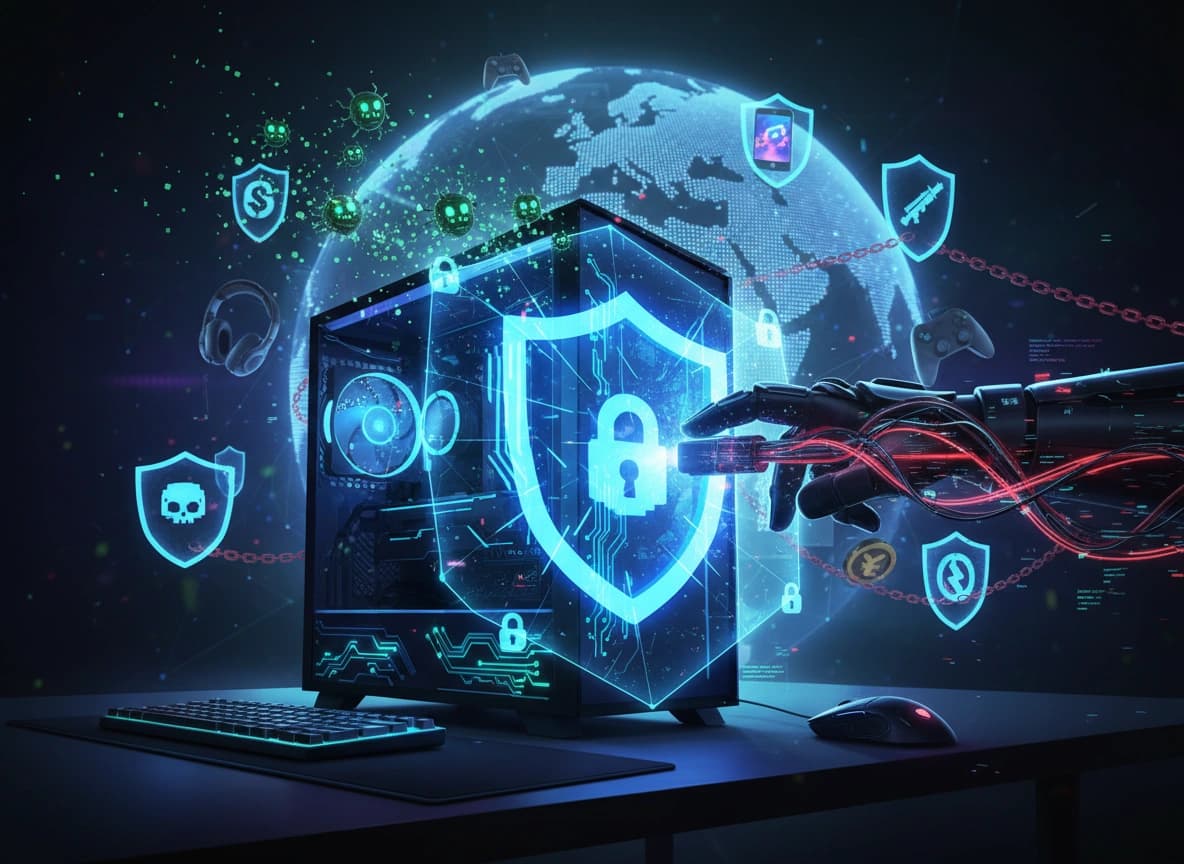
Gaming computers are typically equipped with powerful hardware designed to handle demanding graphics and high-performance gameplay. Many gaming systems include high-performance graphics processing units, large amounts of RAM, and powerful central processing units. These components allow gamers to run modern games smoothly, but they also make gaming computers attractive targets for cybercriminals. When attackers successfully infect these machines with malware, they can exploit their computing power for various malicious activities. For example, infected gaming PCs can be used to mine cryptocurrency without the owner’s knowledge, consuming system resources and electricity. They can also become part of botnets used to launch distributed denial-of-service (DDoS) attacks against websites or online services. Cybercriminals can build powerful networks capable of carrying out large-scale cyberattacks by infecting large numbers of gaming computers.Gaming Communities Are Highly Social
Gaming ecosystems are built around online communities where players regularly interact, share ideas, and collaborate. Gamers frequently communicate through platforms such as Discord servers, game forums, social media groups, and streaming platforms, where discussions about gameplay, strategies, and new tools are common. These spaces help strengthen gaming communities and allow players to connect with others who share the same interests. However, these communities can also provide opportunities for cybercriminals to carry out social engineering attacks. Attackers may attempt to spread malware by posing as trusted members of these groups. Hackers may distribute malicious content in several ways within gaming communities. This can include sharing fake Discord invite links that lead to compromised servers, posting malicious game utilities or tools in chat channels, promoting fake tournament software or updates, or distributing phishing links disguised as helpful downloads. These tactics are effective because players are more likely to trust links or files shared by other gamers or community members, especially in environments where sharing tools and resources is common.Malware Hidden in Cheats and Mods
Cheats and unofficial tools are among the most common sources of malware in the gaming world. Many players look for ways to gain advantages in games or improve performance, and cybercriminals take advantage of this demand by distributing malicious programs disguised as helpful gaming utilities. Attackers frequently spread malware through fake performance boosters, cheat software, game trainers, and cracked downloadable content (DLC) unlockers. These programs often appear legitimate and promise to improve gameplay or unlock additional content. However, once installed, they may secretly deploy malware on the user’s system. This malicious software can steal sensitive data such as passwords, browser information, and cryptocurrency wallet details. In some cases, malware has even been hidden inside game patches or companion tools designed to run alongside the game. Because users of cheat software already expect these programs to behave in unusual ways or interact deeply with the game system, suspicious behavior may go unnoticed. This allows malware to remain undetected for extended periods, giving attackers more time to collect data or maintain access to the infected device.Malware Inside Game Platforms
In some cases, malicious software has been distributed through actual game storefronts. For example, a game uploaded to Steam was later discovered to contain malware that stole cryptocurrency from players, leading to financial losses for victims. Although such incidents are rare, they show that attackers are willing to target the gaming ecosystem at multiple levels.Younger Players Are Easier to Target
A major portion of the gaming community consists of young players. These players are often highly engaged with gaming trends, eager to explore new features, and willing to experiment with unconventional tools to improve their gaming experience. Because of these patterns, cybercriminals frequently design malware campaigns specifically around trending games or highly anticipated releases. Attackers know that by timing their campaigns to coincide with a game’s peak popularity, they can maximize the number of potential victims.How Gamers Can Protect Themselves
While the gaming community is a major malware target, players can reduce their risk by following basic security practices, which include:- Download games only from official stores
- Avoid cracked or pirated games
- Be cautious with mods from unknown sources
- Use strong and unique passwords for all accounts
- Enable two-factor authentication
- Keep antivirus software and operating systems updated